
A commercial electricity bill is not always based solely on how much electricity a business consumes. Many commercial utility rates also account for how much power the facility requires at its highest-demand periods.
That distinction matters. A short period of unusually high electrical demand can affect a business’s utility costs even if its total monthly electricity consumption remains relatively consistent.
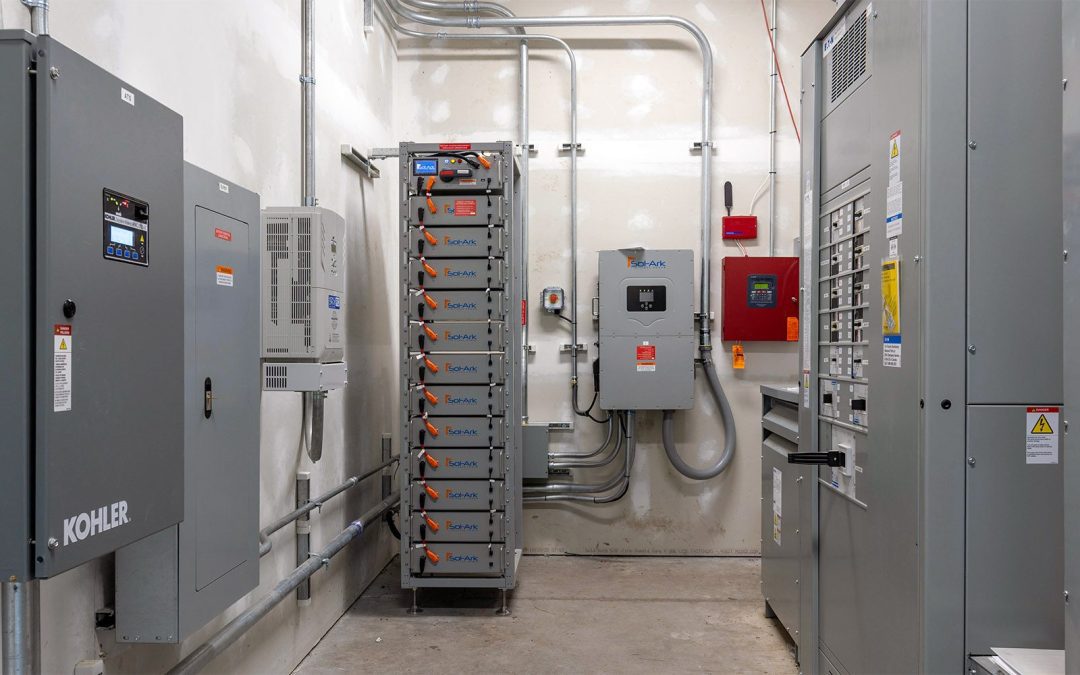
For facilities with significant demand charges, commercial battery energy storage can provide another way to manage those peaks. By storing energy and discharging it when facility demand rises, a properly designed battery system can reduce the amount of power being drawn from the grid at critical times.
Energy Charges vs. Demand Charges
Although both appear on commercial utility bills, energy and demand charges measure different things.
| Charge | Measures | Common Unit |
| Energy charge | Total electricity consumed over time | Kilowatt-hours (kWh) |
| Demand charge | Highest level of power required during a defined period | Kilowatts (kW) |
Think of energy as the total amount of electricity used and demand as the rate at which electricity is needed at a particular moment.
A facility could use the same number of kilowatt-hours in two different months but receive different demand charges if one month included a much higher peak.
Utility tariffs vary. Depending on the rate structure, demand may be based on the facility’s highest measured demand during the billing period or during specific time windows. That makes it important to evaluate the actual utility rate rather than assume all commercial demand charges work the same way.
What Causes Peak Demand at a Commercial Facility?
Demand peaks occur when several significant electrical loads operate at the same time.
At a manufacturing facility, that could happen when production equipment, HVAC systems, compressors, pumps, and other machinery are running simultaneously. At a warehouse, a peak could coincide with cooling equipment, material-handling systems, charging equipment, and other facility loads.
Common contributors include:
- HVAC equipment
- Manufacturing machinery
- Motors, pumps, and compressors
- Refrigeration systems
- EV or equipment charging
- Large electrical equipment startups
- Multiple systems operating simultaneously
The highest peak may last for a relatively short period, but depending on the utility tariff, it can influence demand-related charges for the billing period.
This is why looking only at monthly electricity consumption can miss an important part of a commercial facility’s energy profile.
What Is Peak Shaving?
Peak shaving is the practice of reducing how much electricity a facility draws from the grid during periods of highest demand.
Instead of allowing grid demand charges to rise unchecked, the facility uses another resource to meet part of the load during the peak. Battery storage is particularly well suited to this because it can charge when facility demand is lower and discharge when demand approaches a predetermined threshold.
Imagine a facility whose normal demand is relatively stable but periodically spikes when several large systems operate at once. A battery can discharge during those periods, supplying part of the facility’s power internally.
From the facility’s perspective, equipment continues operating. From the utility’s perspective, however, the amount of power being drawn from the grid is lower.
That reduction is the “shaving” in peak shaving.
How Battery Storage Manages Peak Demand
A commercial battery energy storage system typically works with monitoring and control technology that continuously tracks facility demand.
When demand remains below the facility’s target, the battery may remain available or charge according to its operating strategy. As demand begins approaching a defined threshold, the system can discharge stored energy to reduce grid draw.
A simplified sequence looks like this:
- Facility demand charges begin increasing.
- Controls identify an approaching peak.
- The battery begins discharging.
- Stored energy supplies part of the facility load.
- Grid demand stays below what it otherwise would have reached.
- The battery recharges later based on the system’s operating strategy.
The challenge is predicting when the peak will occur, how high it will be, and how long it will last. A battery that discharges too early could run short when the true peak arrives. One that responds too late may fail to prevent a new billing peak. That is why controls, load data, and system sizing are as important as battery capacity itself.
Book a meeting with a Colite Tech. solar and energy storage expert to review your utility bills, demand profile, and potential peak-shaving opportunity.
A Simple Demand Charge Example
Consider a hypothetical facility with a utility demand charge of $20 per kW.
If its monthly billing peak reaches 500 kW, the demand-related portion associated with that peak would be $10,000 under a simple $20/kW structure. If a battery could successfully reduce the billing peak by 100 kW, the corresponding reduction would be $2,000 for that month.
This is only an illustration. Actual bills may include different demand periods, ratchets, seasonal rates, time-of-use structures, minimum charges, or other tariff rules.
The larger point is that reducing a relatively short demand peak can sometimes affect costs for an entire billing period.
Peak Shaving Starts With the Facility’s Load Profile
Installing a large battery does not automatically produce large demand-charge savings.
The first question is whether the facility has a load profile that gives the battery something meaningful to manage.
A facility with occasional sharp peaks may present a different storage opportunity than one operating at a relatively steady high load all day. Peak duration also matters. A short spike could require substantial battery power but relatively little stored energy, while a peak lasting several hours could require much more battery capacity.
A storage evaluation should therefore look at interval usage data, not just monthly bills. That data can reveal:
- When demand peaks occur
- How frequently they occur
- How long they last
- How high they rise above normal demand charges
- Whether the peaks follow predictable patterns
- How those peaks align with the utility’s demand-charge structure
These factors help determine both whether peak shaving is viable and how the battery should be sized.
Peak Shaving vs. Load Shifting
Peak shaving and load shifting are related, but they are not exactly the same strategy.
Peak shaving targets the facility’s highest demand levels. The primary objective is to keep grid demand below a particular threshold.
Load shifting changes when the facility draws electricity from the grid. A battery may charge during a lower-cost period and discharge later when electricity is more expensive.
A commercial battery can potentially support both strategies when the utility tariff and facility load profile create the opportunity.
For example, the battery might charge overnight or during another lower-cost period, then discharge during an expensive afternoon period while also helping reduce peak demand charges.
This is why Colite Technologies designs energy storage solutions around the facility’s actual operating requirements rather than applying the same battery strategy to every business.
Where Solar Fits Into Demand Management
Solar can reduce the amount of electricity a facility draws from the grid while the array is producing energy. That can sometimes help reduce demand as well, particularly when solar production overlaps with facility peaks.
The challenge is timing. The facility’s highest demand may occur when solar production is declining, during cloudy conditions, or outside the strongest solar-production hours. Research from Berkeley Lab has found that the amount of demand-charge savings from solar varies considerably based on the customer’s load profile and the specific demand-charge design.
Pairing solar with storage can provide more control over when onsite energy is used.
With commercial solar and battery storage, excess or available solar energy can be stored and discharged later when it provides greater value to the facility.
Solar generates the energy. Storage gives the business more control over when that energy is used.
Is Your Facility a Good Candidate for Demand Charge Management?
Battery storage may deserve closer evaluation if your facility:
- Pays significant demand charges
- Experiences identifiable demand spikes
- Has access to interval load data
- Operates large electrical equipment or variable loads
- Faces time-of-use or peak-period electricity pricing
- Already has or is considering commercial solar
- Wants greater control over facility energy use
The presence of demand charges alone does not guarantee attractive project economics. The rate charged per kW, frequency and duration of peaks, battery cost, system size, incentives, and ability to predict and manage those peaks all influence the potential return.
Businesses can explore those broader financial considerations in our guide to commercial battery storage cost, sizing and ROI.
What Data Should You Review?
Businesses do not need to know the appropriate battery size before beginning an evaluation. They do need good energy data.
Useful information includes:
- 12 months of utility bills
- Current utility tariff or rate schedule
- Demand charges shown on recent bills
- Interval load data, when available
- Existing solar production data, if applicable
- Planned facility expansion or new electrical loads
- Operating schedules
- Primary storage goals
From there, the facility’s peaks can be analyzed against the rate structure to determine whether reducing them could create meaningful savings.
Reduce the Peak, Not the Productivity
Management for demand charges should not require a business to compromise normal operations simply to avoid a utility charge.
Battery storage offers another approach: support the facility’s electrical load during critical periods while reducing the corresponding demand placed on the grid.
Whether that strategy makes financial sense depends on the facility, utility rate, load profile, and battery system required to manage the peak. When those factors align, demand charges can become an important part of the business case for energy storage.
Book a meeting with a Colite Tech. solar and energy storage expert to review your facility’s utility bills and determine whether peak shaving and battery storage could reduce your energy costs.