

Commercial battery storage can help a business reduce peak demand, shift when it purchases electricity, make better use of onsite solar, and improve energy resilience. But determining whether storage is a good investment requires more than asking how much a battery costs.
The economics depend on how large the system is, how long it needs to discharge, the facility’s load profile, utility rate structure, installation requirements, available incentives, and what the battery is expected to accomplish.
That is why two businesses installing the same amount of battery capacity can see very different project costs and returns.
How Much Does Commercial Battery Storage Cost?
Commercial battery storage systems are often discussed in terms of cost per kilowatt-hour, but that number can be misleading when used by itself.
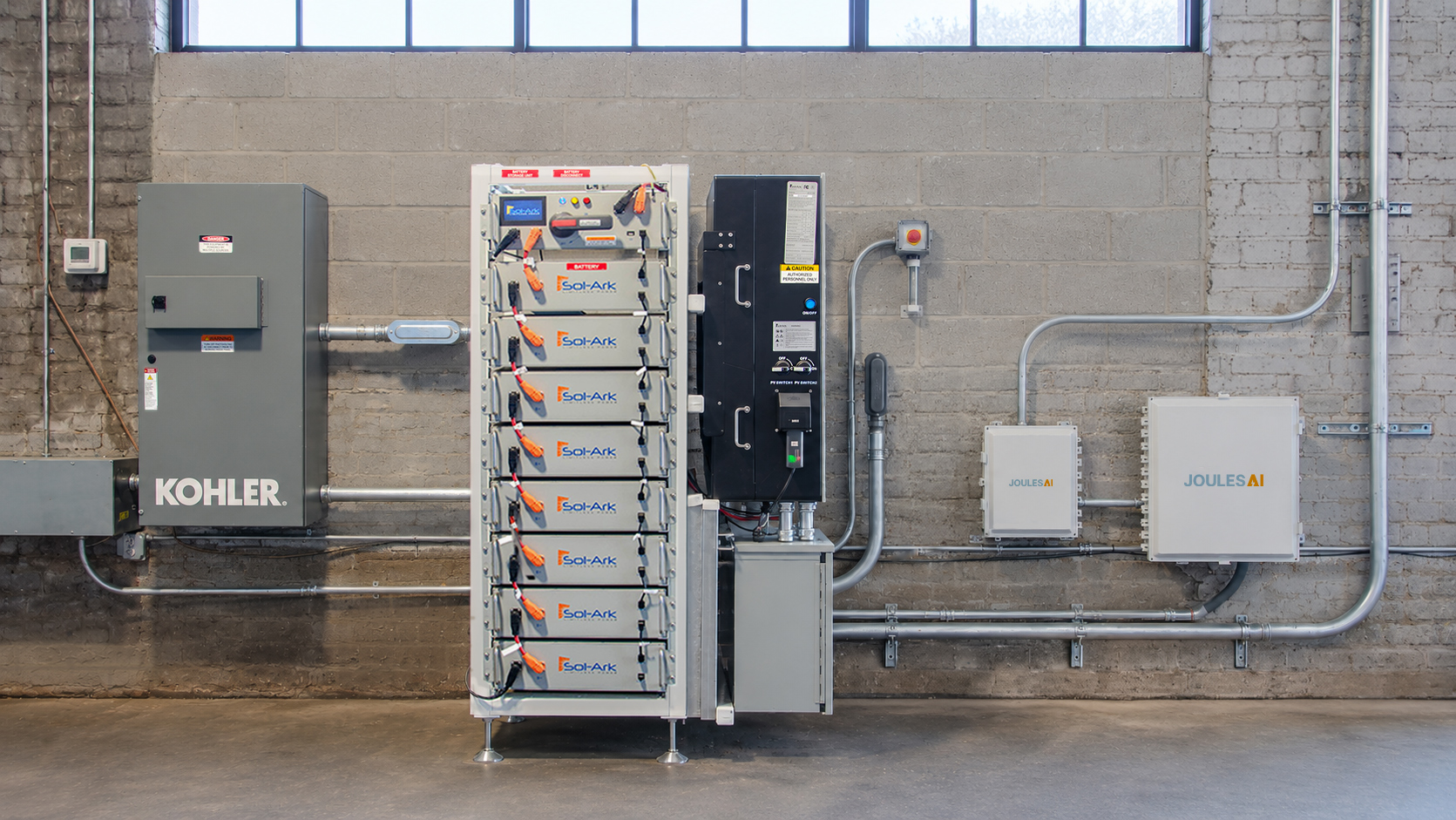
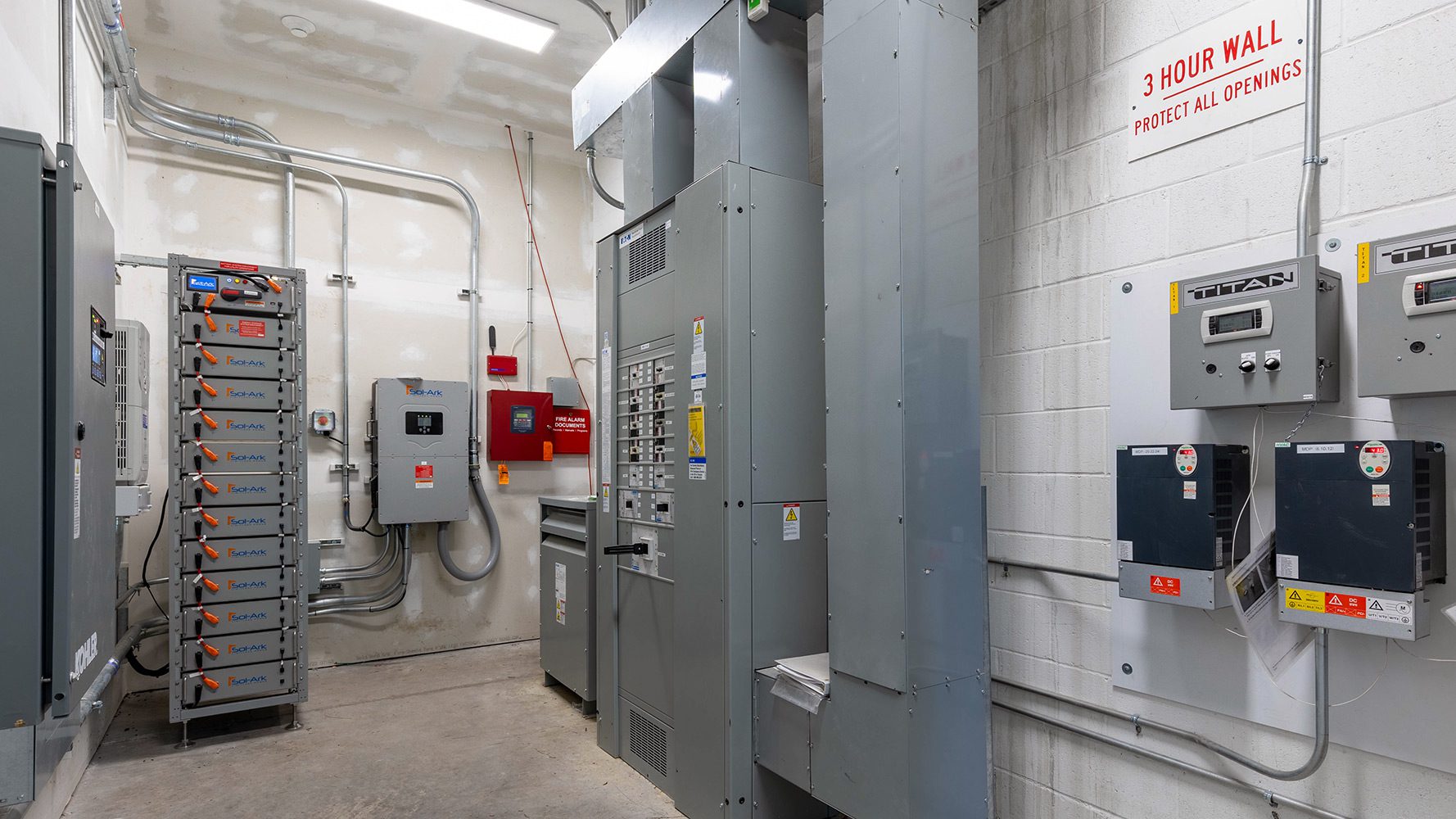
The battery modules are only one part of a complete battery energy storage system (BESS). Installed project cost can also include:
- Battery modules and enclosures
- Inverters and power conversion equipment
- Energy management and monitoring controls
- Electrical equipment and integration
- Site work and foundations
- Engineering and permitting
- Utility interconnection
- Installation and commissioning
- Safety and fire-protection requirements
- Project development and construction costs
National Renewable Energy Laboratory cost models reflect this broader picture, accounting for battery packs as well as inverters, balance-of-system equipment, installation, engineering, permitting, interconnection, and other project costs. System duration also changes cost significantly, which is one reason published battery prices should not be treated as installed-project quotes.
For a business considering commercial battery energy storage, the more useful question is not simply, “What does a battery cost?” It is “What storage system does our facility actually need?”
Battery Sizing: Understanding kW and kWh
Commercial battery storage systems sizing involves two measurements that answer different questions.
Kilowatts (kW) measure how much power the battery can deliver at one time. Kilowatt-hours (kWh) measure how much energy it can store.
A 100 kW / 400 kWh battery, for example, could theoretically discharge at 100 kW for approximately four hours. That makes it a four-hour storage system.
The right combination depends on the business objective:
| Goal | Sizing Priority |
| Reduce short demand spikes | Higher power output may be especially important |
| Shift energy between rate periods | Enough stored energy to cover the targeted period |
| Store excess solar generation | Battery capacity matched to solar production and facility usage |
| Support critical loads | Power, energy duration, and critical-load requirements |
| Multiple use cases | System sized and controlled around several operating priorities |
A larger battery is not automatically a better investment. Oversizing adds cost, while under sizing can prevent the system from delivering the savings or resilience the business expected.
What Determines the Right Battery Size?
Sizing begins with the facility’s actual energy data rather than a standard equipment package.
Important inputs include:
- Facility load profile: When and how much electricity the business uses.
- Peak demand: The highest periods of power draw that may influence demand charges.
- Utility rate structure: Whether the business pays demand charges or time-varying energy rates.
- Solar generation: How much onsite solar is available and when production exceeds facility demand.
- Desired discharge duration: How long the battery needs to provide power for its intended use.
- Critical loads: Which operations need power if resilience or backup capability is a goal.
- Future energy needs: Planned expansion, new machinery, EV charging, or other electrical loads.
Colite Technologies designs energy storage systems around these facility-specific conditions rather than treating battery capacity as a one-size-fits-all calculation.
Book a meeting with a Colite Tech solar and energy storage expert to review your facility’s load profile, utility costs, and potential storage use cases.
Where Does Commercial Battery Storage ROI Come From?
Commercial battery storage does not generate financial value simply by sitting onsite. ROI comes from how the system is charged, discharged, and integrated with the facility’s energy strategy.
For many commercial businesses, the primary opportunities fall into four areas.
Peak Demand Management
Many commercial utility tariffs include demand charges based on the facility’s highest electricity demand during a billing period.
A battery can discharge when facility demand begins to spike, reducing the amount of power drawn from the grid during that period. This strategy is commonly called peak shaving.
The value depends heavily on the utility tariff and the shape of the facility’s demand. Berkeley Lab research has found that demand-charge reduction can be an important source of behind-the-meter storage savings, but results vary with customer usage patterns and rate design.
Time-of-Use Savings
If electricity prices change throughout the day, a battery may charge when energy is less expensive and discharge when grid electricity costs more.
The greater the price difference between those periods, the greater the potential opportunity. Again, the actual utility tariff matters. Storage economics can change substantially depending on how and when electricity is priced.
Solar Energy Optimization
Pairing storage with commercial solar allows a business to store some solar generation instead of using it only when it is produced.
That stored energy can then be discharged later when facility demand or electricity costs make it more valuable. This may be particularly useful when solar production and the facility’s highest-value energy periods do not perfectly overlap.
Resilience and Avoided Downtime
For some businesses, the financial case extends beyond utility savings.
An outage at a manufacturing facility, distribution center, hotel, data-dependent operation, or other critical business can have costs associated with lost production, spoiled materials, disrupted customer service, or other operational impacts.
A battery system designed and configured for backup operation may help support selected critical loads during an outage. The value of that capability depends on the cost of downtime to the individual business, making resilience ROI more company-specific than a utility-bill calculation.
Battery Storage ROI Is Highly Facility-Specific
There is no universal payback period for commercial battery storage.
Consider two facilities with identical batteries. Facility A may face significant demand charges and experience predictable afternoon demand peaks. Facility B may have relatively flat electricity usage and a utility rate with minimal demand-related costs.
The batteries cost roughly the same to install, but the first business could have considerably more opportunity to generate savings.
A meaningful battery ROI model should consider:
- Gross installed project cost
- Utility demand charges
- Time-of-use or other variable energy rates
- Expected charging and discharging patterns
- Solar production, if applicable
- Battery efficiency and expected degradation
- Operations and maintenance requirements
- Applicable incentives
- Financing structure
- Value assigned to resilience or avoided downtime
The analysis should also model how the battery will actually operate, not simply calculate savings from its nameplate capacity.
How Incentives Can Affect Commercial Battery Storage Economics
Incentives can materially reduce the net investment required for qualifying battery storage projects.
Under current federal rules, qualifying energy storage technology placed in service after December 31, 2024, may be eligible for the Clean Electricity Investment Credit under Section 48E. The IRS currently lists a 6% base credit, with the credit potentially increasing to 30% for projects meeting applicable prevailing-wage and apprenticeship requirements. Additional domestic-content and energy-community bonuses may also apply to qualifying projects.
Eligibility and credit value depend on the specific project, taxpayer, timing, labor requirements, equipment, and other factors. Businesses should confirm tax treatment with qualified tax and financial professionals rather than assuming a specific incentive amount.
State, utility, and local programs can create additional opportunities in some markets. Colite Technologies’ guide to solar financing and incentives provides additional context on evaluating available project incentives.
What Factors Have the Biggest Impact on Project Economics?
When a commercial battery storage project produces an attractive return, it is usually because several conditions work together.
Utility rates matter. High demand charges or meaningful differences between off-peak and peak energy prices can create stronger opportunities for storage.
Load shape matters. A facility with predictable peaks may offer a clearer target for battery discharge than one with highly irregular electricity demand.
System sizing matters. Paying for capacity the business rarely uses can hurt ROI, while an undersized system may leave savings opportunities on the table.
Solar integration matters. For solar-plus-storage projects, the relationship between solar production and facility consumption affects how much energy is available to store and when it should be used.
Project cost matters. Electrical upgrades, site work, interconnection, construction requirements, and equipment choices can materially influence installed cost.
How the battery is controlled matters. Monitoring and energy management systems determine when the battery charges and discharges. A well-sized battery still needs an operating strategy aligned with the facility’s goals.
A Real Example: Solar + Storage at Colite Headquarters
Colite Technologies uses solar and commercial battery storage at its own Columbia, South Carolina headquarters.
The system pairs a 34 kW solar PV array with 40 kWh of battery storage, giving the team firsthand experience with how onsite generation, stored energy, facility consumption, monitoring, and incentives work together in a commercial setting.
The important takeaway is not that every business should install the same size system. In fact, the opposite is true. Colite Technologies’ headquarters system was designed around its facility, just as another manufacturer’s, warehouses, or commercial property’s system should be designed around its own load profile and objectives.
The Colite Technologies headquarters solar and storage project provides a closer look at how that system performs in a real commercial environment.
What Information Is Needed to Evaluate Battery Storage?
Businesses considering storage can make an initial analysis more productive by gathering:
- 12 months of utility bills
- Interval electricity usage data, when available
- Demand-charge information
- Current utility rate schedule
- Existing or planned solar system information
- Critical loads requiring backup support
- Facility expansion or future load plans
- Primary goal for storage: savings, solar optimization, resilience, or a combination
That data helps determine whether there is a clear use case before moving into detailed engineering.
Is Commercial Battery Storage Worth It for Your Business?
Commercial battery storage tends to make the strongest economic case when it solves a specific energy problem, whether that means reducing demand peaks, shifting electricity consumption, storing more onsite solar energy, or improving energy resilience.
The right project starts by identifying that opportunity and then sizing the battery around it.
Colite Technologies designs commercial battery storage systems around real facility loads profiles, utility costs, solar generation, and operational requirements. Book a meeting with a Colite Technologies’ solar and energy storage expert to discuss your facility and determine whether battery storage deserves a closer look.