

Commercial energy is evolving beyond solar panels alone. As battery storage becomes more accessible, businesses have new opportunities to manage energy use, reduce costs, and improve resiliency. But getting the most out of these systems requires more than installing the right equipment. It also depends on how energy is managed.
Colite Technologies is exploring that next step through investing in its own solar + battery system and collaboration with JoulesAI, an energy optimization platform designed to help manage distributed energy resources.
By combining solar generation, battery storage, and artificial intelligence, we’re gaining firsthand experience with how intelligent energy management can support commercial and industrial facilities. We spoke with Kevin O’Hara, CEO of Colite Technologies, and Praveen Mandal, CEO of JoulesAI, about the system, the technology behind it, and what it could mean for the future of commercial energy.
Why Colite Technologies is Investing in Solar + Battery Storage
As battery technology improves, solar + battery systems are becoming an increasingly important part of commercial energy strategies. For us, investing in this technology is a way to explore how these systems can work together and how they can better serve our customers.
“The market is transitioning to a more hybrid-based model. We knew we were going to be migrating in that direction, primarily because the cost of battery technology and the performance of the battery systems has improved dramatically over the last couple years, making it more economic,” O’Hara explained.
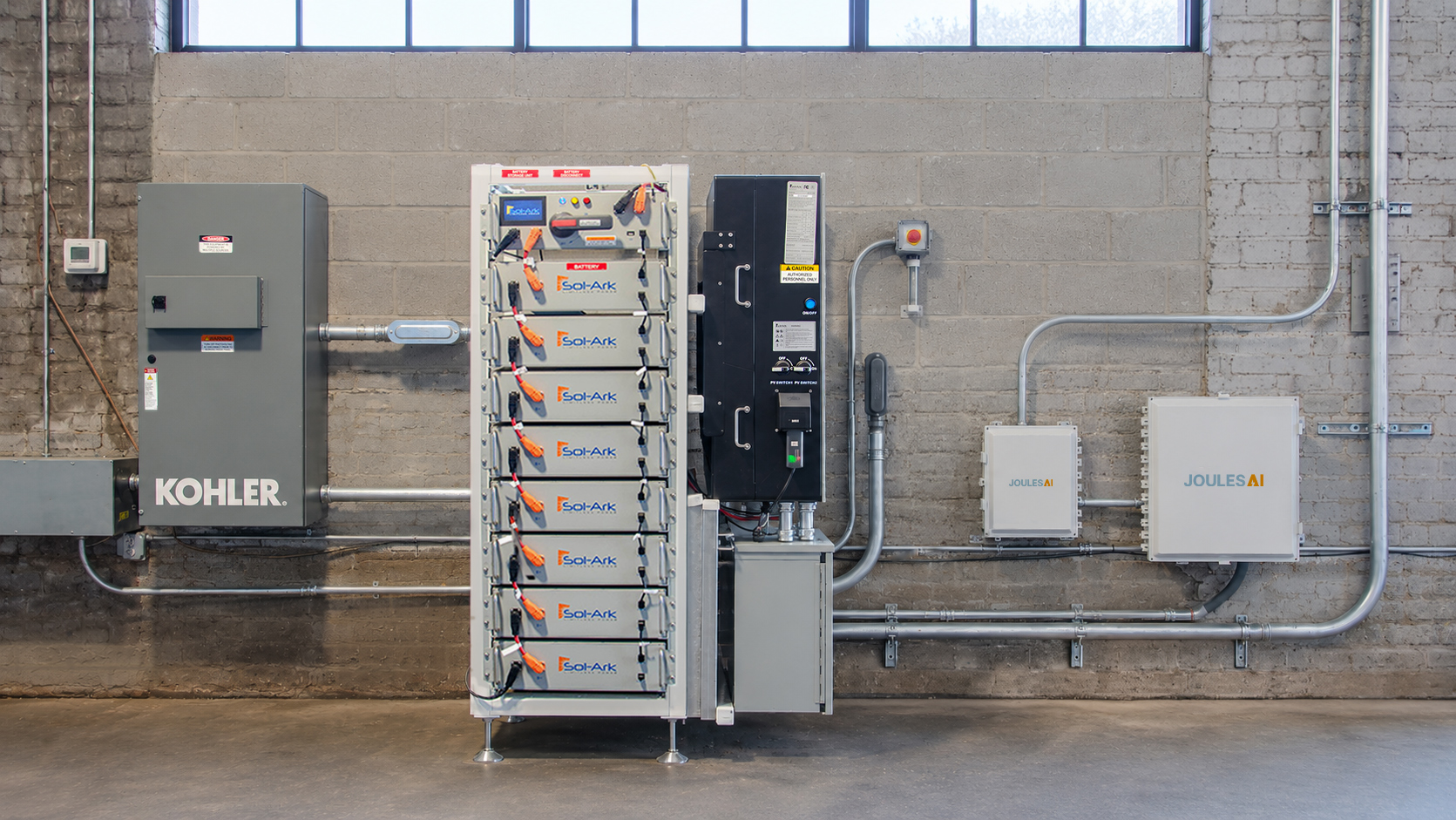
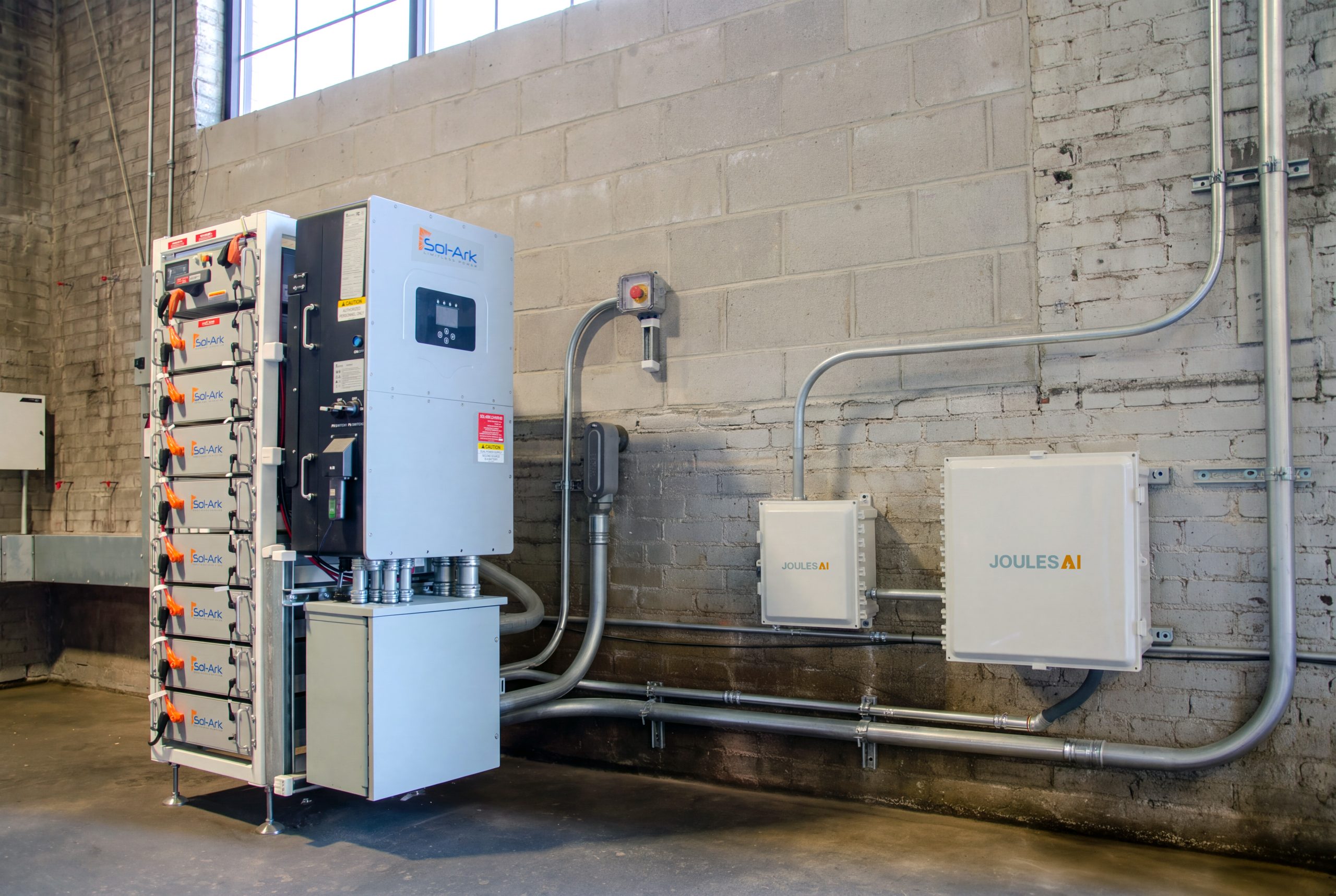
We have installed a hybrid system at our headquarters in Columbia, SC giving us an opportunity to test and better understand the technology in a real-world setting. Rather than relying solely on theoretical designs, we can observe how solar and battery storage perform together and identify opportunities to improve system operation.
As O’Hara explains, having the system on-site is an important part of preparing for the company’s future.
“We wanted to have the system here for testing, exploration, demonstration, potential customers, and anything, particularly given our largest customer has awarded us 86 systems in Virginia and Maryland to be delivered in the next 2-3 years.
Having our own system also allows us to experience the technology from the customer’s perspective. As O’Hara put it, “We are our customer now.”
Bringing Artificial Intelligence Into Energy Management
Installing solar panels and battery storage is only part of the equation. How a system uses and stores energy throughout the day can have a significant impact on its performance and operating costs.
Traditional energy management systems often rely on predefined schedules or operating rules. Artificial intelligence introduces another approach by analyzing system data and adapting its decisions as conditions change.
O’Hara described how Joules AI uses customer-specific information to determine how a battery should operate.
“What JoulesAI does is it learns. Say you give it your rate structure, you give it your historical performance information, your historical usage, and it basically defines what the optimal charge discharge cycle is for the system, which can also adapt in real time as facility or market conditions change.”
This approach gives Colite Technologies another tool for managing distributed energy resources and understanding how they can be optimized for different operating conditions. Additionally, these hybrid systems will not only deliver better energy management performance for our customer’s facility, but also allow them to tap into additional revenues becoming available in the Virtual Power Plant markets of the Independent System Operators (ISO), like PJM, when it makes sense.
“Bottom line, the hybrid systems are increasing our energy management expertise to deliver more value from these systems to our customers,” O’Hara said.
Understanding How JoulesAI Works
The JoulesAI platform, JoulesOS, is designed to coordinate and optimize energy resources based on multiple objectives, including operating costs and system limitations.
Mandal explained that the platform uses reinforcement learning, a type of artificial intelligence that learns through experience and improves its decisions over time.
“JoulesOS is a multi-objective energy orchestration and optimization platform, it uses a special branch of AI called reinforcement learning (RL). Reinforcement learning is best for problems that require a sequence of moves in a very dynamic environment to meet a certain objective.”
For a solar + battery system, those decisions involve determining how available energy resources should be used to meet a building’s needs while accounting for operating costs and battery limitations.
Joules AI evaluates these conditions and continually determines what action should be taken next. Rather than relying solely on an operator to make each decision, the platform is designed to manage the system autonomously within established operating limits.
Because battery decisions can have lasting consequences, JoulesOS also incorporates an additional layer of oversight.
“Furthermore, because AI is data driven and highly statistical in nature, we have teamed up our RL engine with a codified judgment layer; that is, a domain expert that accepts or rejects the RL engine’s proposed actions. After all, you can’t UNDO if the engine has inadvertently drained the battery.”
This judgment layer helps ensure proposed actions are evaluated before they are carried out, an important consideration when managing equipment that must operate within specific limits.
How AI Helps Manage Solar and Battery Resources
To make informed decisions, JoulesAI analyzes information from the energy system, including solar production, battery state of charge, grid power usage, and building energy demand. It also considers market and facility usage forecasts and the utility’s rate structure.
By bringing these factors together, the platform can evaluate how the system should respond to current conditions while accounting for what may happen later.
Mandal described the process as an ongoing series of decisions:
“Every few minutes, it asks one question: given what we expect to happen over the next hours and days, what should each asset do right now to minimize cost (or other objectives) while staying within safe limits?”
This forward-looking approach is particularly relevant for commercial facilities, where energy costs can depend on more than total electricity consumption. Demand charges, for example, may be based on a building’s highest level of power demand during a billing period.
Why Looking Ahead Matters
For businesses with demand charges, battery storage can help manage electricity costs by reducing periods of high demand. However, deciding when to discharge a battery is not always straightforward.
Using stored energy to reduce demand today may leave less available for a future peak. An effective energy management strategy needs to account for both immediate conditions and potential future needs.
As Mandal explains, JoulesAI takes a learning-based approach rather than relying on operators to program rules for every situation.
“The system learns the behavior and sets the policy (i.e. strategy) to manage the various energy resources.”
By learning how to manage these resources, JoulesAI can make decisions that balance current energy costs with the need to preserve battery capacity for future demand.
Learning From Real-World System Operation
Colite Technologies’ internal system is also providing an opportunity to learn through installation, commissioning, and day-to-day operation. As our company works through the process of integrating the technology, it can identify challenges and use those experiences to inform future projects.
O’Hara noted that some differences between system readings and utility data still need to be calibrated. While these are part of the learning process, they also provide valuable experience for Colite’s team.
“We’re trying to get that calibrated, but the beauty is we’re learning here and when we go to the next site, we’re going to have already worked through all those things, and we’re going to be better prepared to deploy, install, commission, and operate the systems more effectively for our customers.”
Operating its own system allows Colite Technologies to better understand the practical considerations involved in deploying energy management technology. That experience can help the company refine its approach as it works on future solar + battery projects.
Expanding Colite Technologies’ Distributed Energy Capabilities
The collaboration with JoulesAI is part of Colite Technologies’ broader interest in expanding its role in distributed energy. Beyond designing and installing solar and battery systems, the company is exploring opportunities to support projects through financing, ownership, and long-term operations.
O’Hara described this as an important part of the company’s direction.
“This is where we’re heading as a company, the only difference now is we’re going to not only design/install these systems, but we’re going to finance and own them too.”
We’re also looking toward the potential of microgrids, which can combine on-site energy resources and backup capabilities to help facilities meet more of their energy needs.
While microgrids represent a longer-term direction, the experience gained from our current system helps the company explore the technologies and strategies that may support these solutions down the road.
“Our ultimate destination is to deploy complete microgrid solutions,” O’Hara said.
What This Means for Commercial and Industrial Customers
For commercial and industrial facilities, energy management is becoming an increasingly important part of planning for long-term operating costs and energy needs. Solar and battery storage can provide additional options, while intelligent energy management can help optimize the use of those resources.
O’Hara sees these solutions as an opportunity to address growing energy demands while providing customers with greater control over their energy use.
“The benefit is better distributed energy, resource solutions to help support an electricity market that is heavily strained. It allows our customers to #1) incur lower cost for energy,
#2) gives them a real viable resiliency as a backup to electric utility power, so it’s less expensive and it’s resilient.”
The potential benefits will depend on each facility’s energy use, utility rates, system design, and operating needs. Colite Technologies’ experience with its own system is helping the company better understand how these factors come together in real-world applications.
Looking Ahead: The Future of Intelligent Energy Management
As commercial energy needs continue to evolve, the combination of solar, battery storage, and artificial intelligence presents new opportunities for managing on-site energy resources.
Through its collaboration with JoulesAI, Colite Technologies is exploring how intelligent energy management can support its internal system and inform future projects. The experience is helping the company build practical knowledge of the technology while continuing to expand its distributed energy capabilities.
For Colite Technologies, the work is about more than integrating new technology. It is about understanding how these systems operate in practice and how they can help businesses manage their energy needs as the industry continues to change.