
Solar for self-storage facilities is quickly becoming one of the most reliable investments in commercial real estate. While most property owners think of solar as a sustainability upgrade, the real story is in the numbers—large rooftops, predictable loads, and long ownership timelines line up almost perfectly with what makes a solar system pencil out.
Why Self-Storage Is Such a Strong Fit
Self-storage facilities have a combination of characteristics that most commercial properties don’t: sprawling flat rooftops, minimal shading, and energy usage that stays fairly consistent year-round. There’s no manufacturing equipment cycling on and off, no retail foot traffic to plan around—just steady loads and a lot of open roof.
For many operators, this means a solar system can be sized to offset a large share of annual usage without complex load balancing.
This is exactly why solar for self-storage facilities continues to outperform expectations across the industry.
Why the Fundamentals Work So Well
- Large, uninterrupted rooftop areas with minimal shading
- Predictable, stable energy consumption
- Long-term ownership models that favor long-payback investments
- Roofing types—TPO and standing seam metal—well-suited to non-penetrating mounts
What the Real Project Numbers Show
The clearest way to understand solar for self-storage facilities isn’t theory—it’s results. Colite Technologies has installed rooftop solar across Extra Space Storage, CubeSmart, and Life Storage properties throughout the Southeast, and the data tells a consistent story.
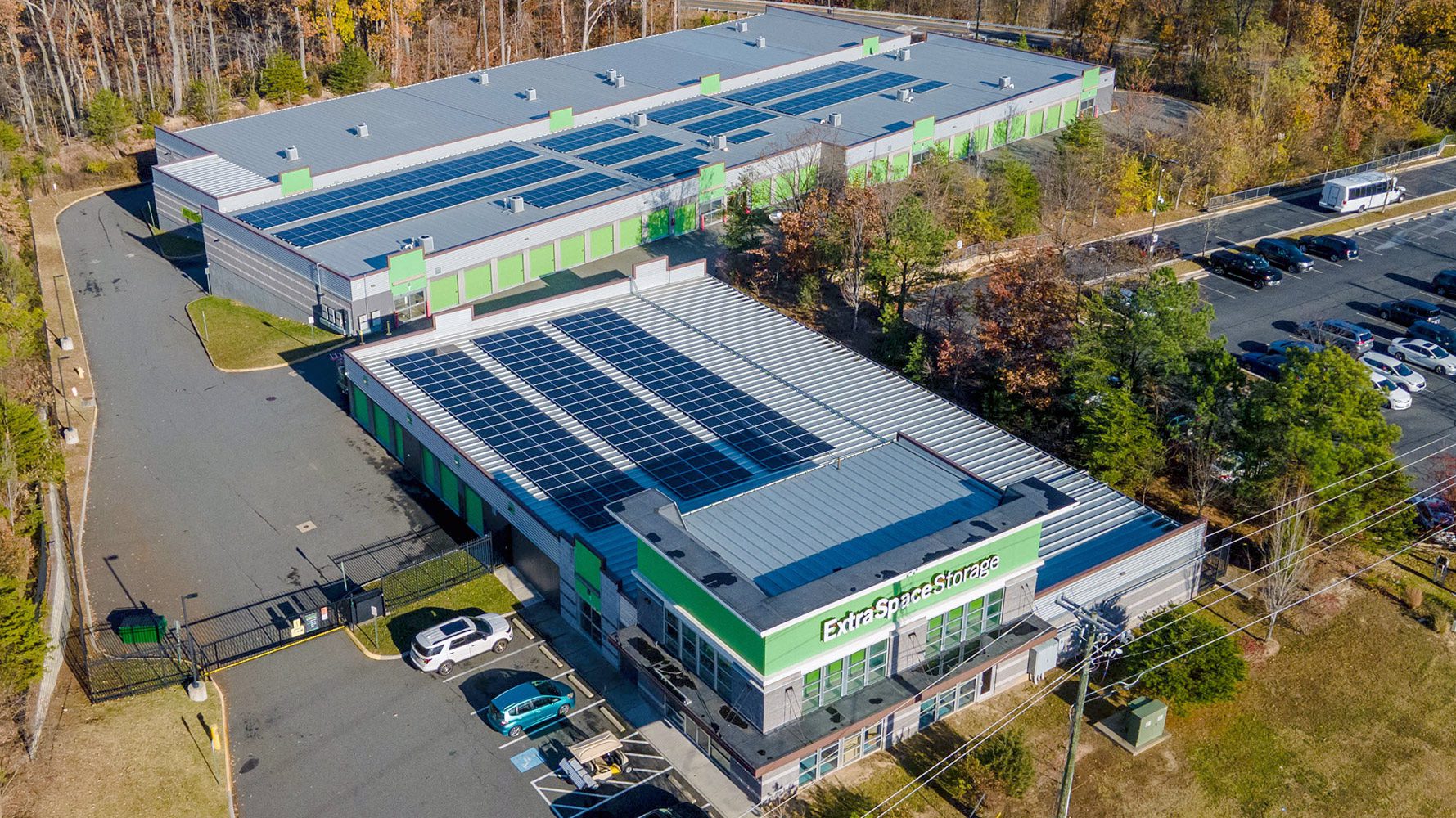
Extra Space Storage – Potomac Mills, Virginia
- 197 kW rooftop solar system
- 117% energy offset
- Approximately $22,719 in annual energy savings
- 4,250 metric tons of CO₂ avoided over 25 years
Extra Space Storage – Briarcliff Road, Georgia
- 99.9 DC kW rooftop solar system
- 72.31% energy offset
- Approximately $15,650 in annual energy savings
- 2,443 metric tons of CO₂ avoided over 25 years
- Nearly 149 MWh generated annually
Extra Space Storage – Merrimac Trail, Virginia
- 282.7 kW rooftop solar system
- 143% energy offset
- Approximately $34,565 in annual energy savings
- 4,530 metric tons of CO₂ avoided over 25 years
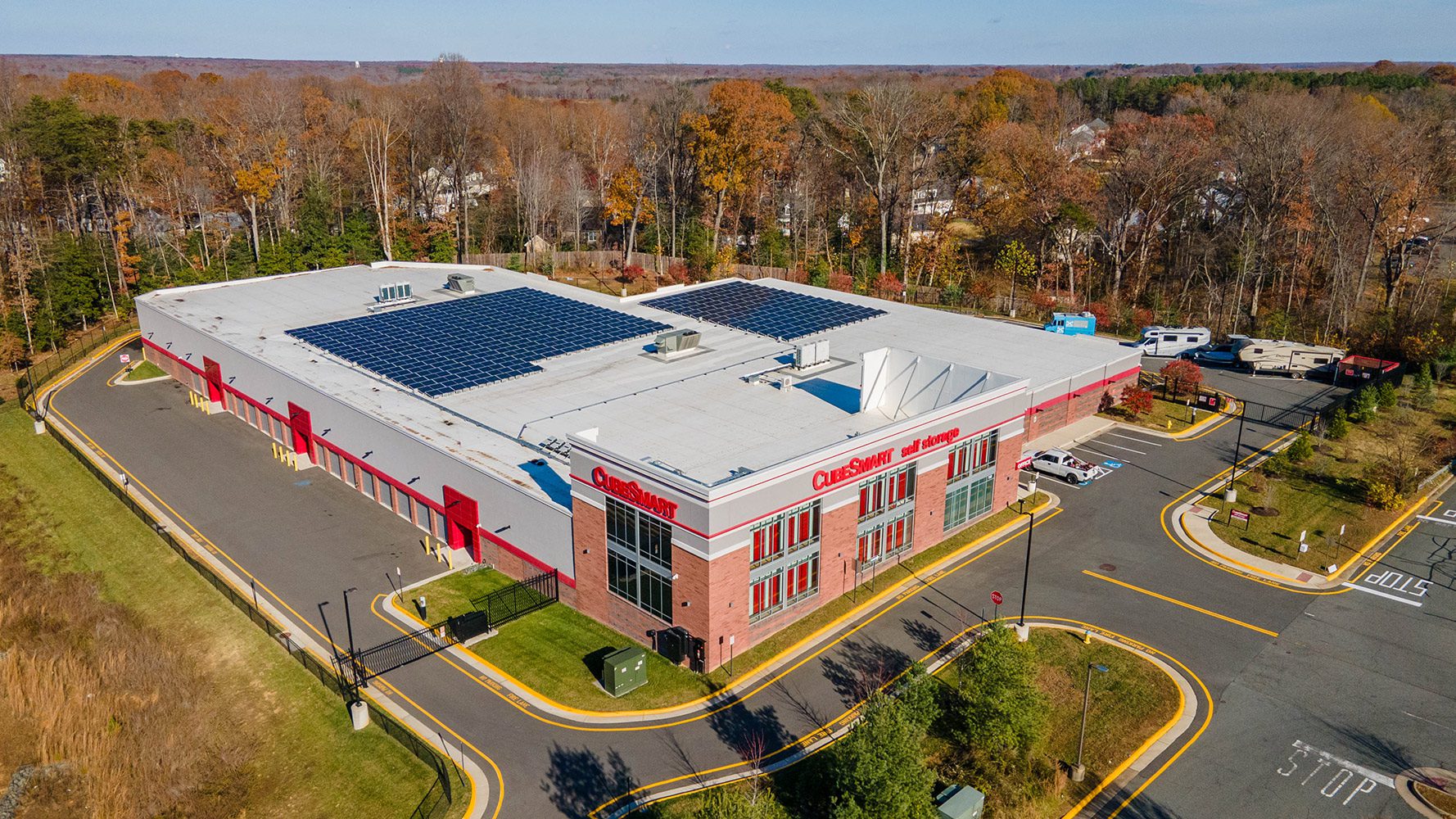
CubeSmart – Stafford, Virginia
- 203 kW rooftop solar system
- 99.71% annual energy offset
- Estimated $32,306 in first-year energy savings
- Approximately $225,500 in federal tax credits and incentives
- 4,418 metric tons of CO₂ avoided over 25 years
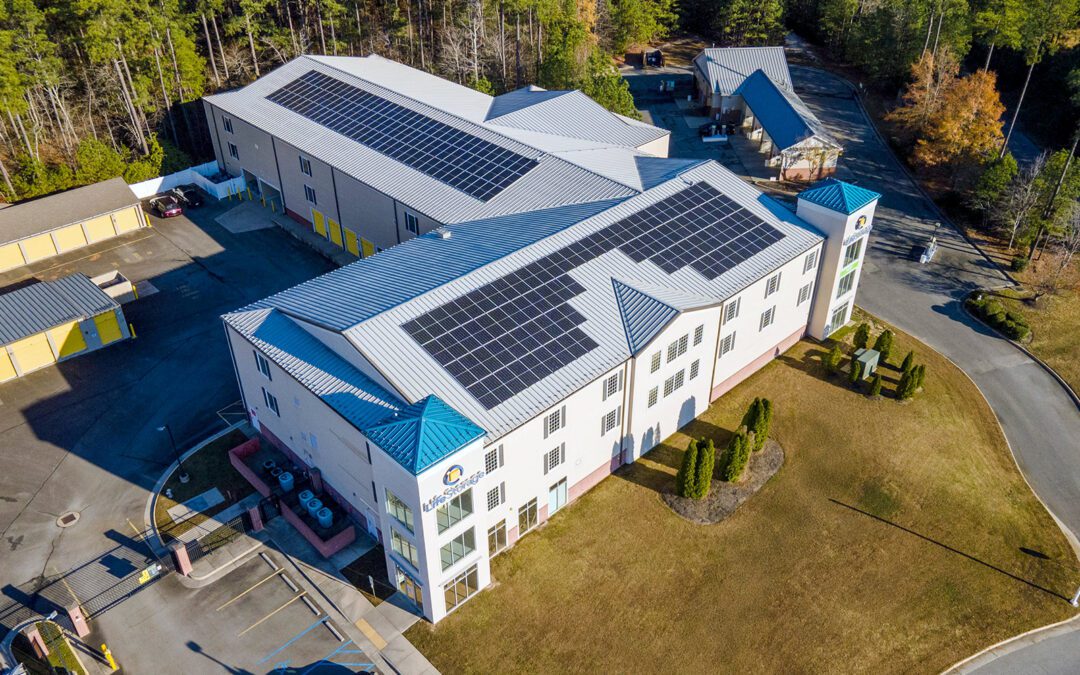
Life Storage – Midlothian, Virginia
- 204.6 kW rooftop solar system
- 64% energy offset
- Approximately $25,443 in first-year energy savings
- 4,750 metric tons of CO₂ avoided over 25 years
Several of these systems offset more than 100% of annual usage—meaning the facility produces more electricity than it consumes over the course of a year. You can read about these self-storage facilities on our commercial solar projects & case studies page.
Why the Payback Period Is So Favorable
Solar for self-storage facilities benefits from a financial stack that most commercial properties can’t fully take advantage of. Three incentives typically work together to shorten payback:
Key Financial Drivers
- Federal Investment Tax Credit (ITC): Eligible projects can receive a 30% federal tax credit, with additional bonus opportunities for qualifying projects
- Accelerated Depreciation (MACRS): Businesses can recover a large share of project cost through depreciation in the early years of ownership
- State and Local Incentives: Rebates, grants, and performance-based programs can further reduce net project cost
- Solar Renewable Energy Credits (SRECs): In eligible markets, systems can generate an additional revenue stream
When these are stacked, self-storage operators frequently see project economics that outperform other commercial real estate categories.
Why Most Operators Underestimate the Opportunity
Many self-storage owners evaluate solar the same way they’d evaluate any other capital improvement—based on sticker price alone.
But that approach misses the full picture.
Common Misconceptions:
- Rooftop solar isn’t worth it for single-story buildings
- Payback periods are too long to matter
- Incentives are too complicated to pursue
- Solar only makes sense for owner-occupied buildings
In reality, solar for self-storage facilities consistently ranks among the highest-returning capital improvements available to property owners, particularly when a system is sized correctly for the roof and usage profile.
Why System Design Makes the Difference
Not every solar system installed on a self-storage roof delivers strong results. The projects above range from 64% to 143% energy offset—proof that design strategy matters as much as roof size.
Key Design Inputs
- Roof type and structural capacity
- Historical utility usage data
- Non-penetrating mounting systems to preserve roof integrity
- Sizing strategy based on offset goals versus available space
Why Non-Penetrating Mounts Matter
Most self-storage rooftops use flat TPO or standing seam metal roofing. Non-penetrating mounting systems allow solar arrays to be installed without drilling into the roof membrane, preserving roof warranties and long-term integrity.
Long-Term Value Beyond the Utility Bill
Beyond monthly savings, solar improves the underlying value of a self-storage property.
Key Advantages
- Reduced operating expenses that improve net operating income (NOI)
- Increased long-term asset value
- Reduced exposure to rising utility rates
- Meaningful sustainability metrics for institutional owners and REITs
Over time, solar for self-storage facilities becomes less of a utility offset and more of a long-term driver of property performance.
How Colite Technologies Can Help Your Self-Storage Facility Take the Next Step
Solar for self-storage facilities isn’t a theoretical benefit—it’s backed by real project results across some of the largest operators in the industry. Extra Space Storage, CubeSmart, and Life Storage have all seen strong energy offsets, meaningful annual savings, and significant tax incentives from properly designed rooftop systems.