

Solar energy can help businesses reduce their reliance on grid electricity and take greater control of their energy costs. But generating electricity is only part of the equation. What happens when that energy is produced but not needed immediately? And what happens when the grid goes down?
Commercial battery energy storage gives businesses another way to manage when and how electricity is used. By storing energy and making it available when it is needed most, battery storage can help businesses manage demand charges, take advantage of changing electricity rates, improve power quality, and maintain critical operations during outages.
When integrated with solar, commercial battery energy storage can also help businesses capture more value from their on-site generation and reduce their reliance on grid electricity.
Why Businesses Are Turning to Energy Storage
Commercial and industrial facilities are facing increasingly complex energy challenges. Electricity costs, demand charges, growing electrical loads, and concerns about power reliability can all affect a facility’s operating costs and productivity.
Commercial battery energy storage provides businesses with greater control over how and when they use electricity. Rather than relying entirely on power from the grid as it is needed, a battery system can store energy and discharge it strategically based on a facility’s operational needs.
The right storage strategy depends on the facility. A manufacturing plant with heavy electrical loads may have different priorities than a distribution center, office building, hotel, agricultural operation, or automotive dealership. That’s why battery storage should be designed around how a business actually consumes energy.
Managing Demand Charges
For many commercial customers, electricity bills are influenced by more than total energy consumption. Demand charges can be based on a facility’s highest periods of electricity use, making short periods of high demand an important part of overall energy costs.
Commercial battery energy storage can help manage these peaks by discharging stored energy when facility demand rises.
This process, often referred to as peak shaving, can reduce peak demand and help businesses better manage demand-related charges. Instead of allowing the facility to draw its entire power requirement from the grid during a high-demand period, stored energy can supplement grid power when it provides the greatest value.
For facilities with variable or heavy electrical loads, this type of energy management can be an important part of a long-term strategy for controlling energy expenses.
Getting More From Time-of-Use Rates
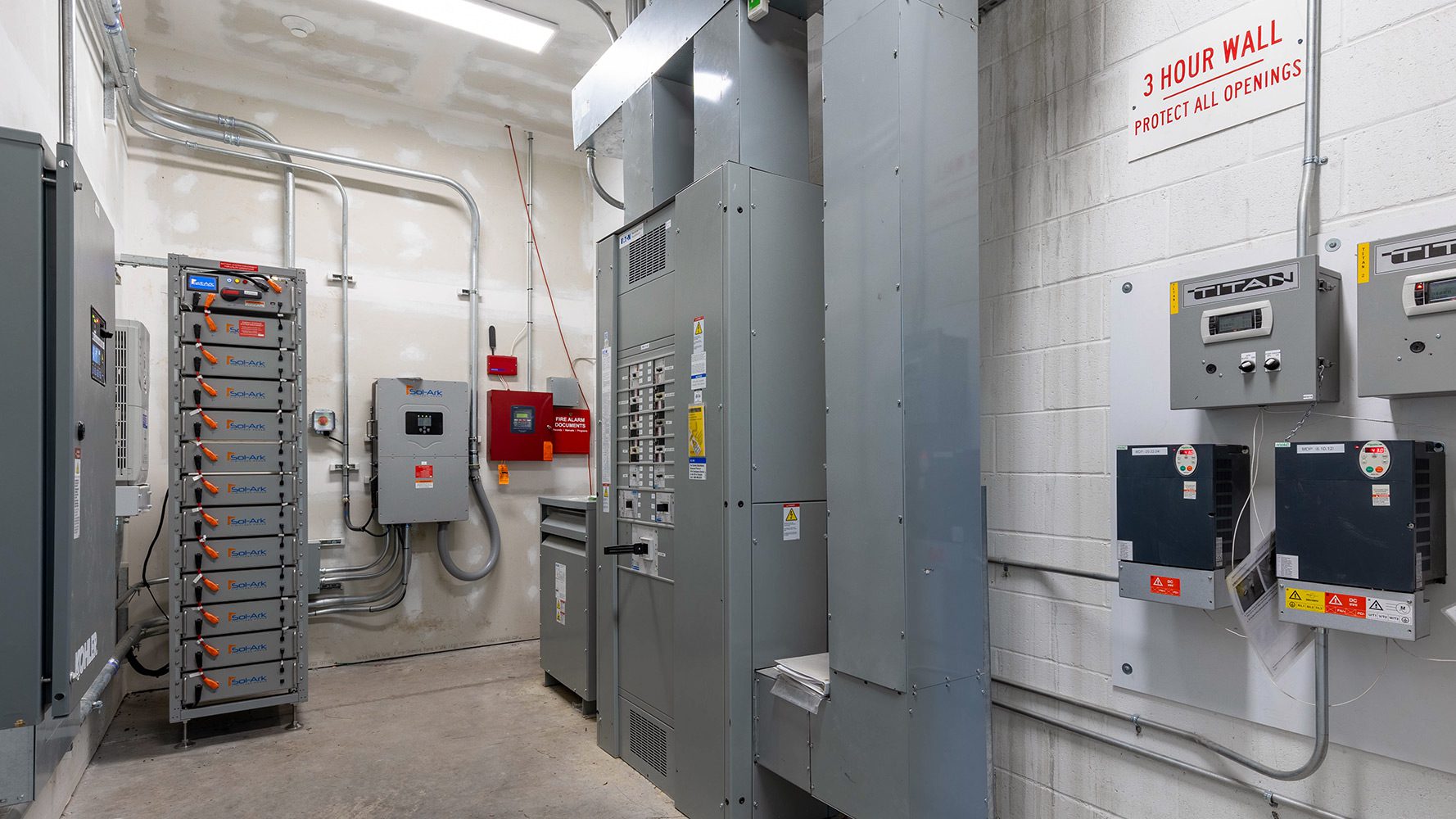
Electricity doesn’t always cost the same throughout the day. Some utility rate structures use time-of-use pricing, where electricity is more expensive during certain periods and less expensive during others. Commercial battery energy storage can give businesses more flexibility in how they respond to those rate structures.
Energy can be stored when electricity costs are lower and then used during higher-cost periods. When paired with solar, batteries can also store excess solar generation and make that energy available later in the day.
The potential financial impact depends on the utility rate structure, facility load profile, battery configuration, and other project-specific factors. A detailed analysis can help determine whether energy shifting makes sense for a particular facility.
Improving Energy Resilience
Power outages can have consequences far beyond a temporary inconvenience. An interruption can affect production, refrigeration, security systems, communications, servers, lighting, and other essential equipment.
Commercial battery energy storage can provide backup power for designated critical loads when the grid is unavailable. With the appropriate system design and controls, stored energy can help businesses maintain essential operations and reduce the impact of unexpected outages.
Battery storage can also support greater energy resilience during normal operations by giving businesses another source of power to draw from when needed.
For facilities where maintaining operations is especially important, storage can be part of a broader resilience strategy that may include solar generation, backup generation, and microgrid controls.
Supporting Power Quality
Energy storage can provide benefits beyond simply supplying electricity. Certain battery systems can help support voltage and frequency regulation, contributing to improved power quality. This can be particularly relevant for facilities with sensitive equipment, variable electrical loads, or operations where power quality is an important consideration.
Rather than viewing a battery solely as backup power, businesses can evaluate commercial battery energy storage as an energy management resource that can support several operational objectives at once.
Solar and Battery Storage Work Together
One of the most valuable applications for commercial battery energy storage is integrating it with on-site solar. Solar panels generate electricity when the sun is available, but a facility’s highest energy needs do not always occur at the same time as peak solar production. Battery storage helps bridge that gap.
Excess solar generation can be stored rather than immediately sent to the grid, allowing the business to use that energy later when it is needed. This can increase the value of on-site solar generation while reducing reliance on grid electricity.
Solar and storage can therefore work together as part of a broader energy strategy: solar generates electricity, storage provides flexibility, and intelligent controls help determine when energy should be generated, stored, or used.
A Scalable Approach to Energy Storage
Energy needs can change as a business grows. A facility may add equipment, expand operations, increase electrical loads, or change how it uses its existing space.
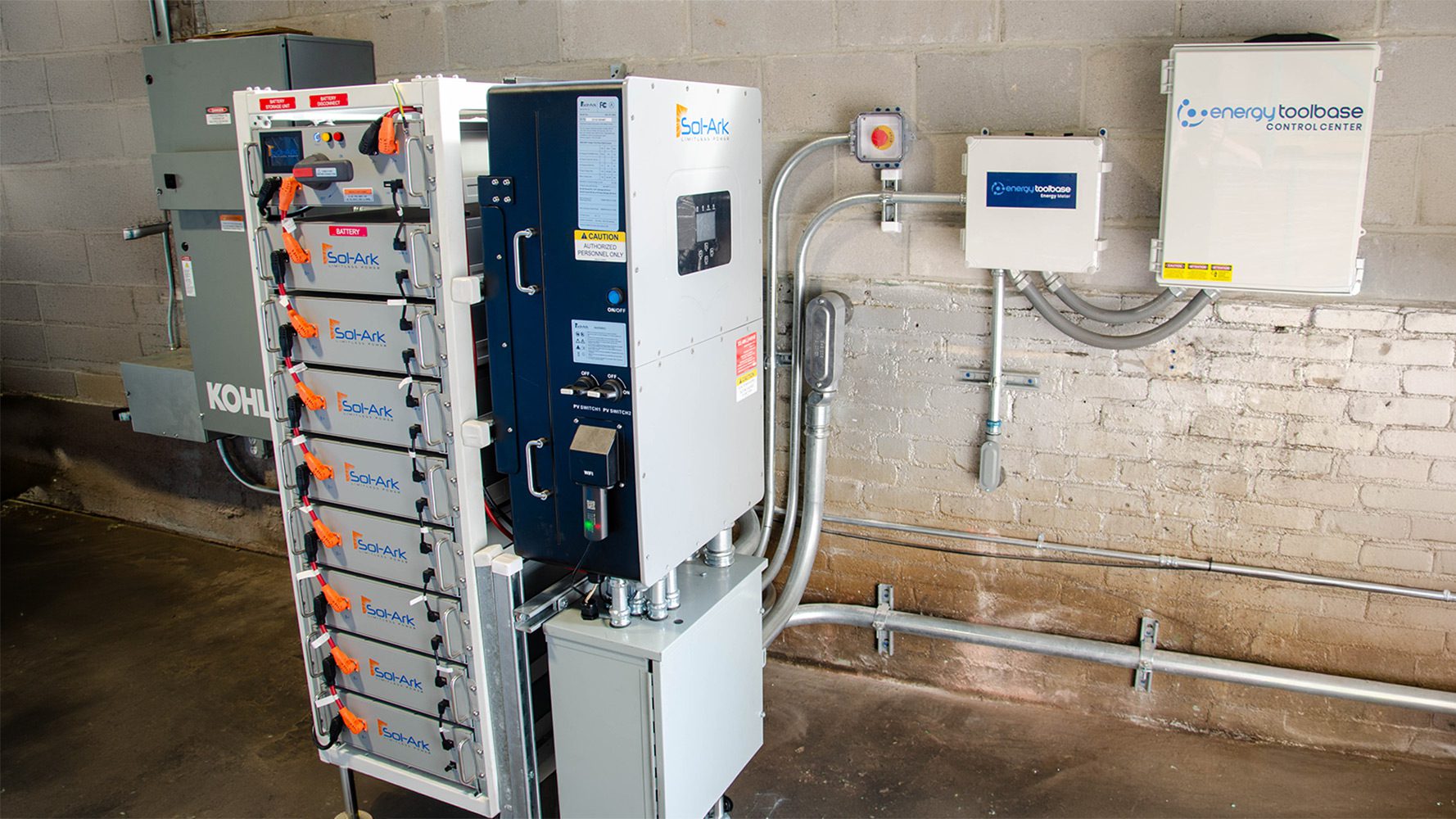
That’s why commercial battery energy storage doesn’t necessarily have to be a one-time, fixed solution. Modular storage systems can provide opportunities to expand or adapt a system as energy requirements evolve. A scalable approach allows businesses to consider both their current energy needs and their longer-term operational goals when developing a storage strategy.
Designing the Right Energy Storage Strategy
There is no universal battery system that works for every commercial facility. The right solution starts with understanding how a business uses electricity.
Important factors include the facility’s load profile, utility rate structure, demand charges, critical electrical loads, outage requirements, existing solar generation, available space, and long-term energy goals.
At Colite Technologies, we design and install integrated energy storage solutions around the specific needs of commercial and industrial facilities. Our approach considers how commercial battery energy storage can support demand charge management, energy resilience, power quality, energy management, and solar generation.
Whether the goal is reducing peak demand, taking advantage of time-of-use pricing, improving resilience, or maximizing an existing or planned solar investment, battery storage can provide businesses with greater control over their energy.
Take Control of Your Energy Strategy
Energy storage is becoming an increasingly important part of how commercial and industrial facilities manage power. With the right system, businesses can store energy when it is available, use it when it provides the most value, and maintain greater control over their operations.
Commercial battery energy storage is more than a backup power solution. It can be a tool for managing energy costs, supporting resilience, improving power quality, and maximizing the value of on-site solar generation. We work with businesses to evaluate their energy needs and develop customized storage solutions designed around their facility, operations, and goals.
If you’re considering adding battery storage to your facility or want to understand how storage could work alongside your existing or planned solar system, contact Colite Technologies to explore your options.