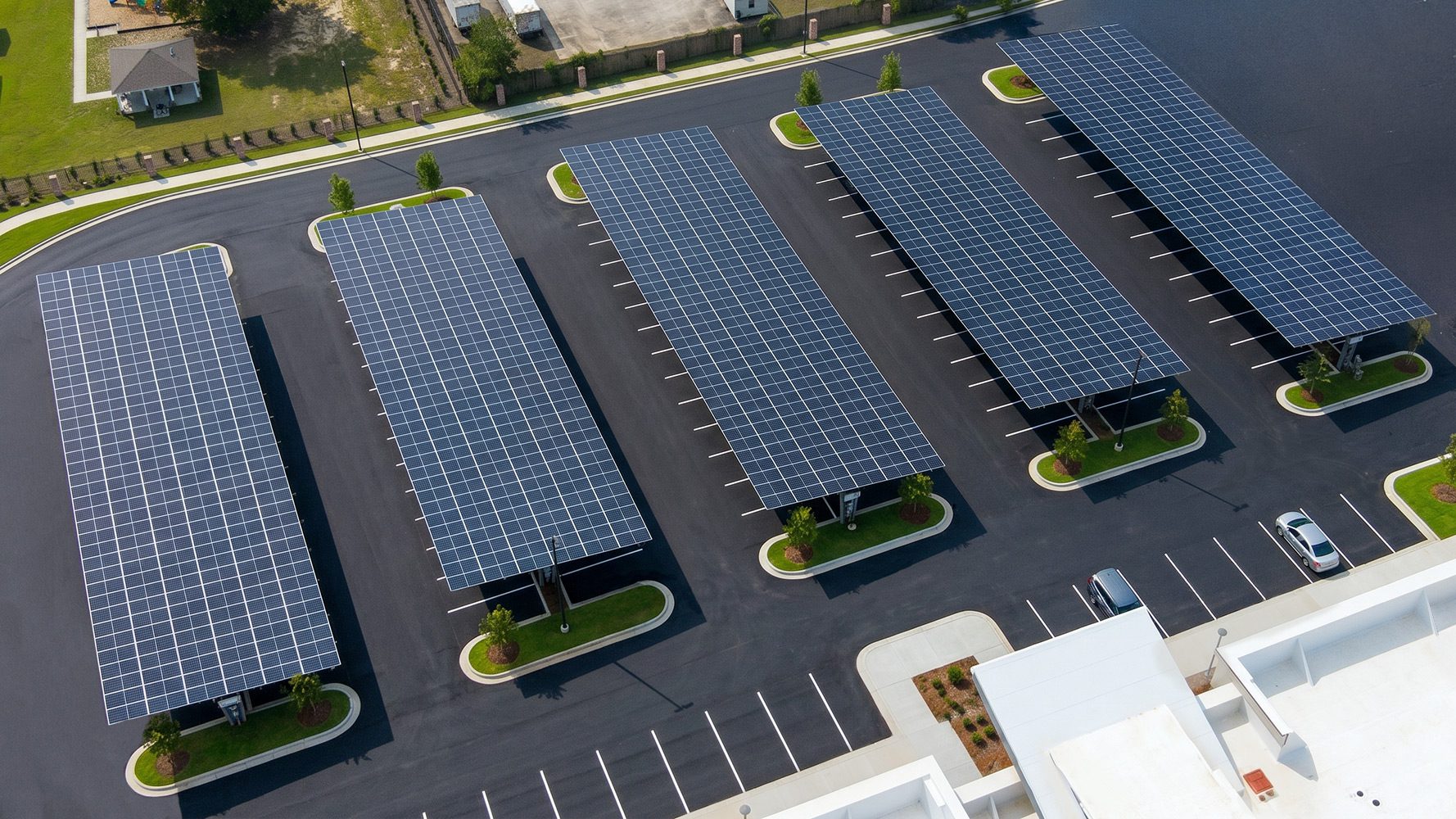
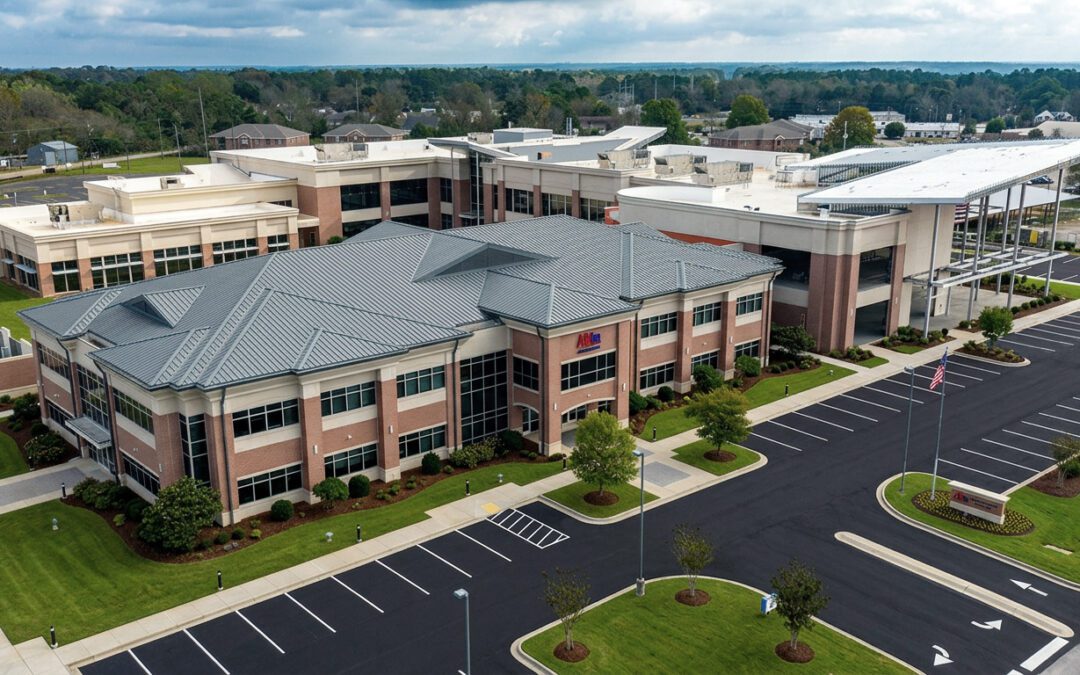
Solar for Financial Institutions is a smart investment for credit unions and community banks because their energy use closely aligns with when solar systems produce the most electricity. Walk into any branch during business hours and you’ll find servers, security cameras, ATMs, vault climate control, teller terminals, and HVAC systems all running throughout the day. That predictable nine-to-five energy demand is exactly what makes financial institutions such an overlooked fit for commercial solar.
Large national banks have the budget to experiment with energy projects. Solar for financial institutions gives steady daytime hours, buildings they own long-term, and a mission built around reinvesting in the communities they serve. It’s part of why solar for financial institutions has quietly become one of the more practical energy upgrades in the sector, even if it doesn’t get the same attention as manufacturing or distribution.
Why Financial Institutions Are a Natural Fit for Solar
A typical branch doesn’t run three shifts or fluctuate wildly with seasonal demand. It opens, it operates through daylight hours, and it closes—which happens to track almost exactly with when a rooftop solar system produces the most power. That overlap matters more than it might seem. It means a system can be sized around actual, well-understood usage patterns instead of guesswork, and it means the savings show up during the hours the branch is actually open and drawing power.
A few reasons the fit tends to work:
- Energy use is concentrated during daylight operating hours
- Branches are typically owned, not leased short-term
- Institutions with multiple locations can standardize the approach across a network
- Community reinvestment goals already align with sustainability commitments

What’s Actually Running Behind the Counter
Before any solar for financial institutions conversations goes further, it helps to look at what’s actually at stake inside a branch. This isn’t a warehouse or a retail storefront—there are systems here that simply cannot go dark, even for a moment:
| System | Why It Can’t Be Interrupted |
|---|---|
| Server rooms & data infrastructure | Houses transaction and account data |
| Security & surveillance | Required for safety and compliance |
| ATMs & self-service kiosks | Member-facing, expected to be always-on |
| Vault climate control | Protects physical assets and records |
| Teller & transaction systems | Directly tied to daily operations |
Designing solar for financial institutions takes more coordination than a standard commercial rooftop project. It means the facilities team, IT security, and compliance all need a seat at the table from the start.
One Branch Is Different from Twenty
A single standalone branch, a shared retail space, a drive-thru-only location, and a regional operations center all present different roofs, different electrical setups, and different constraints. A historic downtown branch might face architectural restrictions a suburban location never would.
That variability is the reason a network-wide rollout can’t be treated as one project multiplied by twenty. It’s twenty projects, each shaped by its own site conditions, permitting requirements, and construction sequencing—tied together by a consistent design and installation process.
The Power Continuity Question
The moment a new solar and battery system comes online is, understandably, the moment banks worry about most. It’s a fair concern—even a brief interruption at a branch can affect member trust, not just operations.
Done right, bringing a system online involves:
- Mapping out temporary power continuity before any cutover begins
- Verifying backup and redundancy systems are functioning ahead of time
- Coordinating directly with branch staff and IT teams on timing
- Keeping someone on-site through the entire transition
Existing generators or UPS systems don’t get replaced in this process—they get integrated. Battery storage adds a layer that keeps security systems, network infrastructure, and vault operations powered through outages, working alongside the backup power already in place.

Where the Return Actually Comes From
The financial case for solar for financial institutions isn’t just the utility bill going down, though that’s part of it. It’s a combination of factors that compound over time:
- Lower operating costs across every branch in the network, not just one location
- Reduced exposure to electricity rate increases in the years ahead
- Protected uptime for the systems that matter most during an outage
- Standardized performance once a design approach is proven at one branch and repeated at others
- Community and sustainability value that supports the institution’s broader mission
Rethinking a Common Assumption
The most common reason a credit union or community bank hasn’t looked into solar isn’t cost—it’s the assumption that a regulated financial facility is too complicated to work with. In practice, it’s the opposite: because these buildings already require careful coordination around uptime and security, they tend to be well-suited to a methodical, branch-by-branch approach rather than a rushed one.
Where to Start Growing Your Banking Facility
For many organizations, solar for financial institutions is most effective when it begins with a single branch serving as a proof of concept. Once the first project is complete, the design, permitting, and installation process can be replicated across additional locations, creating a scalable energy strategy for the entire portfolio.
Colite Technologies works with financial institutions to build exactly that kind of process—one that treats security, compliance, and uptime as the starting point, not an afterthought. If your institution is weighing solar for one branch or twenty, reach out to our team to talk through what a branch-level strategy could look like for you.