

Investing in solar energy isn’t just an environmental decision anymore—it’s a strategic financial move. As utility costs rise and sustainability becomes a business priority, companies are turning to commercial solar systems for reliable, long-term savings. But before taking the leap, most decision-makers want one critical answer: What’s the real return on investment?
Understanding Commercial Solar ROI (Return on Investment) helps you see how solar transforms not only your energy expenses but also your bottom line. In this guide, we’ll explore how to calculate ROI accurately, which factors influence it, and why solar is one of the smartest business decisions you can make in 2026 and beyond.
At Colite Technologies, we’ve helped countless organizations unlock strong financial returns through efficient, customized solar systems. Let’s break down how your company can do the same.
What Is Commercial Solar ROI?
Commercial Solar ROI measures how much value a business gains from its solar installation compared to the cost of investment. It shows the financial efficiency of your solar project over time—how long it takes for the system to pay for itself, and how much profit it generates afterward.
In simpler terms, it’s your financial snapshot of success:
ROI = (Total Financial Benefit – Total Cost of Investment) ÷ Total Cost of Investment × 100
When your ROI percentage climbs, so do your savings and long-term returns.
Why Commercial Solar ROI Matters for Businesses
In today’s competitive market, understanding Commercial Solar ROI is essential for financial planning. Solar installations can reduce energy costs, stabilize cash flow, and enhance your company’s sustainability credentials—all while delivering impressive fiscal results.
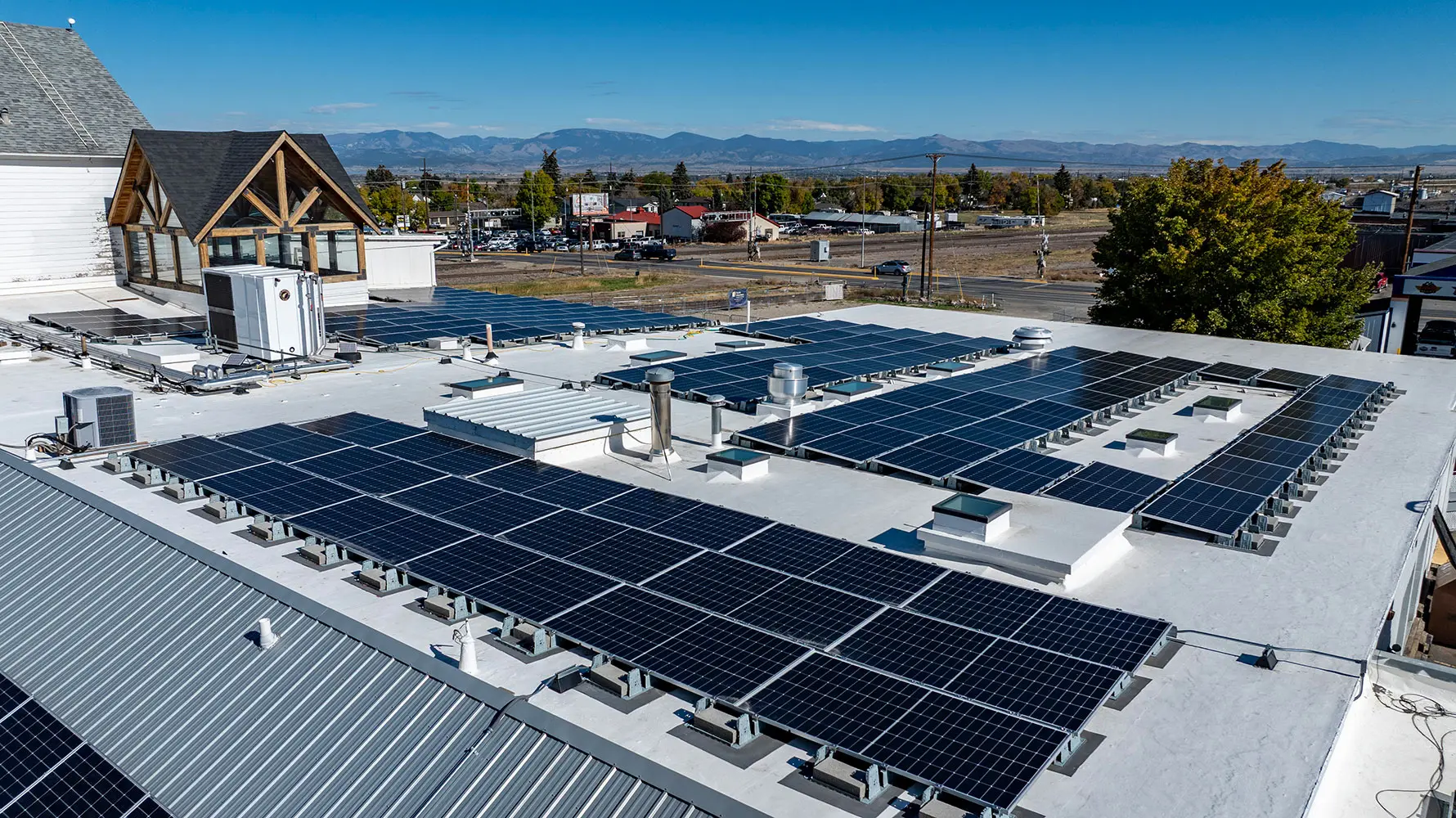
Key Financial Advantages:
-
Lower Energy Bills: Solar offsets utility costs immediately after activation.
-
Tax Incentives: Businesses benefit from federal credits like the Investment Tax Credit (ITC).
-
Depreciation Benefits: Accelerated depreciation reduces taxable income.
-
Increased Property Value: Solar-equipped properties often have higher valuations.
-
Protection from Rate Hikes: Solar locks in predictable, lower-cost energy for decades.
Each of these directly contributes to your overall solar investment analysis, helping determine how profitable your system will be over time.
The Building Blocks of Commercial Solar ROI
When calculating Commercial Solar ROI, several variables come into play. Let’s look at the major ones.
1. System Cost
This includes the design, engineering, equipment, permits, and installation. The total investment is your starting point.
2. Energy Savings
Your savings come from the power your system generates. If your business consumes a large amount of electricity, solar can offset a significant portion of your bill—sometimes up to 70–90%.
3. Incentives and Tax Credits
Government incentives like the ITC (currently 30%) dramatically boost ROI. State-specific programs and utility rebates can further improve your solar payback period.
4. Operational Lifespan
Commercial solar panels typically last 25–30 years. Over that time, the cumulative savings grow far beyond the initial investment.
5. Maintenance Costs
Routine inspections and cleaning are minimal, but they ensure consistent system performance. The lower your maintenance costs, the higher your Commercial Solar ROI.
How to Calculate Your Commercial Solar ROI
Let’s simplify this using a real-world example:
-
System Cost: $250,000
-
Annual Energy Savings: $45,000
-
Federal ITC Credit (30%): $75,000
-
Net Investment: $175,000
-
System Lifespan: 25 years
Step 1: Calculate total savings over lifespan
$45,000 × 25 years = $1,125,000
Step 2: Subtract net investment
$1,125,000 – $175,000 = $950,000
Step 3: Divide by investment
$950,000 ÷ $175,000 = 5.43 (or 543% ROI)
That’s a powerful example of how commercial solar can multiply its value over time. Your exact Commercial Solar ROI will vary depending on system size, location, and energy usage.
Understanding the Solar Payback Period
Your solar payback period is the time it takes for energy savings and incentives to cover your upfront costs. For most businesses, this period ranges between 4 to 7 years—after which every dollar saved goes straight to your profit margin.
Factors that speed up the payback period:
-
High electricity rates
-
Significant daylight exposure
-
Tax incentives or grants
-
Energy-efficient building upgrades
After this break-even point, your business enjoys nearly free electricity for decades—drastically improving long-term Commercial Solar ROI.
Regional ROI Differences: Why Location Matters
Your location has a huge impact on Commercial Solar ROI. Sunlight exposure, state policies, and electricity rates vary across regions.
South Carolina
Strong sunshine and favorable tax policies make it one of the best states for business solar. Learn more on our South Carolina Solar page.
Georgia
With competitive solar financing and energy rebates, Georgia offers solid business solar savings opportunities. See details on our Solar in Georgia resource.
Virginia
Virginia’s growing renewable sector and corporate incentive programs are creating impressive solar investment analysis outcomes. Explore options on our Virginia Solar Installation page.
Each location affects sunlight availability, local incentives, and installation costs—all of which influence ROI projections.

The Role of Commercial Energy Efficiency
Improving your commercial energy efficiency before or alongside solar installation can dramatically enhance returns. The less power your facility wastes, the more of your solar energy goes toward meaningful savings.
Strategies to Boost Efficiency:
-
Upgrade to LED lighting.
-
Optimize HVAC and building insulation.
-
Implement smart monitoring systems for energy usage.
-
Use motion sensors and automated controls.
When these upgrades align with solar generation, your Commercial Solar ROI grows exponentially.
How Financing Affects ROI
There are multiple ways to finance your solar project, and each impacts your overall Commercial Solar ROI differently.
1. Cash Purchase
Pay upfront, benefit from full ownership, and maximize tax advantages. This usually delivers the highest ROI.
2. Solar Loan
Low-interest loans spread out payments while allowing you to retain ownership and long-term savings.
3. Power Purchase Agreement (PPA)
With a PPA, you pay only for the electricity generated—ideal for businesses that prefer no upfront investment.
Choosing the right financing structure is a major part of accurate solar investment analysis.
The Intangible Returns of Going Solar
While financial ROI is crucial, solar brings indirect value that enhances your overall business performance:
-
Brand Reputation: Customers increasingly prefer companies demonstrating sustainability leadership.
-
Employee Engagement: Teams take pride in working for environmentally responsible organizations.
-
Energy Independence: Reduced reliance on volatile energy markets builds operational confidence.
These intangible benefits might not fit neatly into an equation, but they add real-world value to your Commercial Solar ROI story.
Common Mistakes When Evaluating Solar ROI
Even savvy business owners can miscalculate ROI by overlooking important factors. Here are the most frequent mistakes:
-
Ignoring Maintenance Savings – Modern solar systems require minimal upkeep compared to traditional infrastructure.
-
Overlooking Incentives – Failing to factor in rebates or tax credits can skew projections.
-
Focusing Only on Short-Term Returns – Solar is a long-term investment that compounds in value over decades.
-
Underestimating Energy Inflation – As energy prices rise, your solar savings grow exponentially.
-
Neglecting Professional Assessment – DIY calculations can miss critical cost and performance variables.
To avoid these pitfalls, partner with experienced professionals like Colite Technologies, who specialize in designing systems that deliver maximum Commercial Solar ROI.
Case Example: Mid-Sized Manufacturing Facility
A mid-sized manufacturing company in Georgia installed a 400 kW commercial solar system at a cost of $620,000.
-
Annual Energy Savings: $110,000
-
Federal ITC: $186,000
-
State Incentives: $20,000
-
Net Investment: $414,000
-
System Life Expectancy: 25 years
ROI Projection:
Over 25 years, savings totaled approximately $2.75 million. Subtracting the initial cost, the company achieved a Commercial Solar ROI exceeding 560%, with a solar payback period of just under 5 years.
This kind of result showcases why solar is now a mainstream business investment rather than a niche sustainability effort.
How to Improve Your Commercial Solar ROI
Boosting your solar returns starts with strategy. Here’s how you can optimize performance and maximize profitability:
-
Choose the Right System Size: Oversized systems can reduce ROI by generating excess power you can’t use.
-
Leverage Data Analytics: Use monitoring tools to track real-time energy generation and savings.
-
Schedule Routine Maintenance: Prevent small issues from affecting output.
-
Combine Solar with Storage: Adding batteries increases savings and resilience during peak hours.
-
Work with Certified Experts: Experienced installers ensure optimal placement, performance, and efficiency.
Every detail counts toward increasing your Commercial Solar ROI—from design and financing to maintenance and monitoring.
The Future Outlook of Commercial Solar ROI
As technology advances and installation costs continue to decline, Commercial Solar ROI will only get stronger. Future developments in energy storage, smart grids, and predictive monitoring will shorten payback periods and increase long-term profitability.
Businesses adopting solar now stand to gain early advantages—establishing both financial and operational resilience as energy markets evolve.
Final Thoughts: Make Solar Work for Your Bottom Line
Calculating your Commercial Solar ROI isn’t just about numbers—it’s about envisioning a more efficient, sustainable, and profitable future for your business. By considering energy costs, system design, incentives, and location, you can make confident, data-driven decisions that deliver measurable returns.
At Colite Technologies, we specialize in designing, financing, and maintaining commercial solar systems that maximize ROI for organizations across South Carolina, Georgia, and Virginia.
If you’re ready to discover your true solar investment analysis and see how much your business could save, contact our experts today. Let’s turn your roof or property into a long-term energy asset and elevate your bottom line—one solar panel at a time.