
The transportation and logistics industry runs on efficiency. Every operational decision — from fuel usage to route optimization — directly impacts profitability. But one major operating expense continues to rise for trucking and fleet companies across the country: electricity.
As terminals become more energy-intensive with EV charging infrastructure, refrigerated storage, lighting systems, office operations, and maintenance facilities, utility costs are becoming harder to control. That’s why more companies are turning to Commercial Solar for Trucking Companies as a long-term energy strategy.
By installing solar systems at fleet terminals, distribution hubs, and trucking facilities, businesses can reduce operational expenses, stabilize energy costs, and strengthen sustainability initiatives without disrupting day-to-day operations.
Why Energy Costs Are Rising for Fleet Operators
The logistics industry depends heavily on electricity, especially at large terminal locations operating around the clock. Utility inflation, demand charges, and peak usage fees are creating significant financial pressure for fleet-based businesses.
Common energy-consuming operations include:
- Exterior security lighting
- Warehouse and terminal lighting
- Truck maintenance facilities
- Refrigerated storage systems
- Administrative offices
- EV fleet charging infrastructure
- Loading dock equipment
- HVAC systems
For companies operating multiple terminals, these expenses add up quickly across an entire network.
Unlike fluctuating fuel costs that companies often anticipate, utility rates can rise unpredictably year after year, making energy budgeting increasingly difficult.
Why Solar Makes Sense for Trucking Terminals
Commercial Solar for Trucking Companies is uniquely suited for fleet operations because terminals often have the exact infrastructure solar developers look for.
Large Roof Space Availability
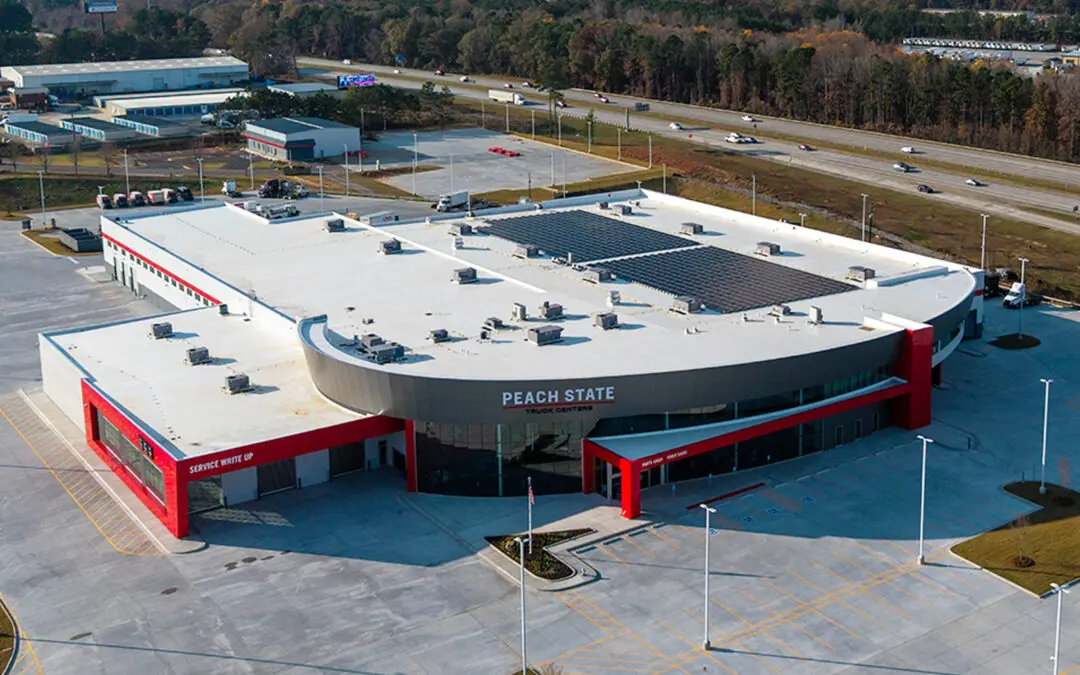
Fleet terminals, warehouses, and maintenance facilities typically have expansive flat rooftops ideal for solar panel installations. These large surfaces allow businesses to generate substantial amounts of electricity onsite without sacrificing operational space.
High Daytime Energy Usage
Most trucking facilities operate heavily during daytime hours, which aligns perfectly with solar production. Instead of purchasing expensive electricity from the grid during peak demand periods, businesses can offset those costs directly with solar energy generation.
Predictable Long-Term Savings
One of the biggest advantages of Commercial Solar for Trucking Companies is cost predictability. Solar helps businesses reduce exposure to utility inflation by locking in lower long-term energy costs. For fleet operators managing tight margins, predictable operating expenses create stronger financial planning opportunities.
Solar Supports Fleet Electrification Goals
The transportation industry is rapidly moving toward electrification. As electric delivery vehicles and fleet trucks become more common, charging infrastructure will dramatically increase electricity demand at terminals. Without solar, utility bills can rise significantly as EV adoption expands.
Offset EV Charging Costs
Solar systems can help offset the electricity required to charge electric fleet vehicles during the day, reducing strain on operating budgets.
Reduce Demand Charges
Fleet charging often creates spikes in energy demand, leading to expensive utility demand charges. Solar production can help lower these peaks and reduce monthly electricity expenses.
Prepare Facilities for Future Growth
Installing solar today helps future-proof terminals for expanding energy needs tomorrow.
As charging infrastructure scales, Commercial Solar for Trucking Companies with onsite energy generation will be better positioned to manage operating costs effectively.
Financial Incentives Continue to Drive Solar Adoption
Federal tax incentives and depreciation benefits continue making Commercial Solar for Trucking Companies a financially attractive investment for transportation and logistics businesses.
Federal Investment Tax Credit (ITC)
Eligible businesses can significantly reduce project costs through the federal Investment Tax Credit, helping improve overall project returns.
Accelerated Depreciation Benefits
Many companies also take advantage of accelerated depreciation strategies that allow solar assets to generate additional tax savings.
State and Utility Incentives
Depending on the project location, businesses may qualify for local utility rebates or state-level clean energy programs that further improve project economics.
Energy Resilience Matters More Than Ever
Power outages and grid instability can create major operational disruptions for trucking terminals and distribution centers.
A facility without power may experience:
- Delayed shipments
- Inoperable loading docks
- Downtime in maintenance operations
- Security system interruptions
- Refrigeration failures
- EV charging disruptions
Solar, especially when paired with battery storage, can improve facility resilience and help support critical operations during grid outages.
Battery Storage Integration
Battery Energy Storage Systems (BESS) allow facilities to store excess solar production for later use, increasing energy reliability and backup capabilities. For logistics operations where uptime is critical, resilience has become just as important as energy savings.

What Trucking Companies Should Evaluate Before Going Solar
Every trucking facility has unique operational and structural considerations. Before starting a project, companies should evaluate:
- Current utility costs and usage patterns
- Roof condition and remaining lifespan
- Available roof or land space
- Facility energy demand
- Future EV charging plans
- Utility rate structures
- Local incentives and regulations
Working with an experienced commercial solar EPC partner helps ensure the system is properly designed for long-term performance and operational goals.
Why EPC Experience Matters for Transportation Facilities
Commercial Solar for Trucking Companies terminals are complex operational environments. Solar installation projects must be carefully coordinated to minimize disruption and maintain safety standards.
An experienced EPC contractor can assist with:
- Engineering and system design
- Utility coordination
- Structural evaluations
- Permitting and compliance
- Construction scheduling
- Interconnection management
- Long-term system monitoring
The right solar partner understands how to execute projects efficiently while keeping facilities operational throughout the installation process.
The Future of Logistics Is More Energy Independent
As utility prices continue rising and fleet electrification accelerates, more transportation companies are recognizing the long-term value of onsite energy generation.
For many operators, solar is no longer viewed as just a sustainability initiative — it’s becoming a strategic business decision.
Investing in Commercial Solar for Trucking Companies can help reduce operating expenses, support future infrastructure growth, improve resilience, and create greater energy independence for years to come.