A Short History of Electric Lighting
Humans have been using different methods to produce light since the discovery of fire millions of years ago. As early humans evolved and civilizations grew, the use of artificial light increased across the world. The availability of light increased safety and productivity for people after the sun had set – spurring innovation and societal development. Eventually, with the discovery of electricity in the 18th century, we were able to bring brighter, safer lighting to buildings and outdoor areas. The progression of electric lighting technology from arc lamps to LEDs is a fascinating story with many international contributors. Follow along through time.
Arc Lamps
Before the lightbulb, there were arc lamps. The first persistent electric arc was tested by Russian physicist Vasilij Vladimirovič Petrov 1802 and led to the creation of the arc lamp. An arc lamp uses two aligned carbon electrodes that are initially touching and then slowly separated to a specific distance. This produces an arc of very intense light and heat, which eroded the electrodes as the lamp was used.
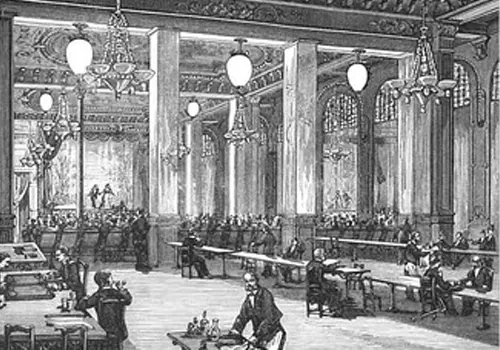
Since the size of the gap between the electrodes is very important to lamp operation, the early arc lamps required consistent manual adjustment. Despite the necessity of frequent adjustments, these lamps were much better than candles; in 1846, the Opera Theatre in Paris became the first public building equipped with electric arc lamps.
Over time, lighting technology advanced and began incorporating electromagnets to automatically regulate the electrode distance. In 1877, Charles F. Brush designed his own automatically regulated arc lamp, becoming the leading American producer of electric lighting.
However, a year earlier, Russian telegraph engineer Pawel Jablochkov Nikolayevich had introduced a brighter, more efficient design known as the Jablochkov candle.
This simple setup used two parallel carbon rods to maintain a constant arc length without adjustment. Its simplicity and efficiency made it highly competitive—producing hundreds of foot-candles while consuming about 9 amps, compared to other lamps that used nearly twice as much.
The Jablochkov candle spurred the widespread adoption of electric lighting across Europe, and by 1881, Godalming, UK became the first city to implement an electric street lighting system using arc lamps.
Despite the better technology of the Jablochkov candle, Brush’s arc lamp design became the most common lamp in the US. The first American use of arc lighting was in the Wanamaker department store in Philadelphia in 1878 and by 1881, many major North American cities were equipped with public arc lighting systems. The intense light provided by arc lamps was great for use in outdoor areas, warehouses, and factories, but too much for small room settings like homes and offices. This necessitated the need for the incandescent bulb: a smaller, more manageable light source that could be used in small rooms.
Incandescent Bulbs
The technology behind incandescent lamps had been explored since 1801, but the first practical electric light bulb wasn’t produced until 1879 by Englishman Joseph Wilson Swan. Using the Sprengel pump, developed in 1865, Swan was able to remove nearly all oxygen from the bulb’s chamber, preventing filament burnout and greatly extending bulb life.
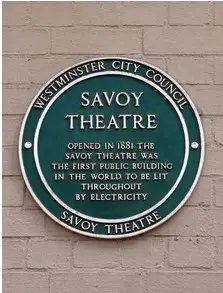
His success led to the Savoy Theatre in London becoming the first public building illuminated by incandescent electric lighting in 1881, with 1,194 of his lamps.
Meanwhile, across the Atlantic, Thomas Edison was conducting thousands of experiments with different filaments, ultimately discovering that carbonized bamboo fiber could burn for about 1,200 hours in 1880. When compared with three other bulbs at the 1881 International Exhibition of Electricity in Paris, Edison’s design proved the most efficient and commercially viable.
Its high resistance and low current operation made it ideal for wiring multiple lamps in parallel, setting the stage for widespread electric lighting use.
Gas Discharge Lamps
Gas discharge lamps gained popularity in the early 20th century, though the technology dates back much earlier. The first gas discharge tube, invented by Heinrich Geissler in 1857, served as the foundation for many later designs. One notable example is the neon lamp, developed by French chemist Georges Claude in 1909 and introduced in the U.S. in 1923. Neon lighting quickly became a symbol of modernity, widely used in storefronts and advertising. While true neon signs still exist, most of what we see today are LED-based faux-neon lights that replicate the same vibrant glow with greater efficiency and durability.
Fluorescent tube lights commonly used in office and retail settings also borrowed from Geissler’s technology. The design was patented in 1926 by Edmund Germer in Germany and has a powder coating on the inside of the glass that acts as a frequency converter, producing a more pleasant light for indoor applications. The electronics manufacturer GE acquired the rights to the fluorescent tube in 1939 and reached large-scale commercial production after World War II.
These lights have become a staple in commercial buildings and can be found in almost any lighting supply store. Compact fluorescent lights (CFLs) were introduced by Philips, another electronics manufacturer, in 1980 and quickly established themselves as a better alternative to incandescent light bulbs for residential use.
In the outdoor lighting realm, different technologies prevail. In 1927, the high-pressure mercury vapor lamp was developed by Hungarian physicist and engineer Dénes Gabor. It was used as street lighting throughout the thirties but was superseded by the low-pressure sodium vapor lamp shortly after.
Sodium vapor dominated the street lighting market because of its unparalleled efficiency of 200 lumens per watt – twenty times higher than incandescent lights and almost five times higher than high-pressure mercury vapor lights. However, their distinct yellow light made them only suitable for outdoor use. By the end of the 1930s, rural areas of Europe and North America were electrified and featured sodium vapor lamps along their streets.
Then in the 1960s, advancements in incandescent technology led to halogen lamps. Halogen lamps use any halogen (iodine, bromine, chlorine, and fluorine) to prevent the evaporation of a filament inside a light bulb. Metal halide lamps combine a halogen with a metal to create bright light that looks more white than other combinations of gases. The better color rendering resulted in the greater use of metal halide fixtures in parking lots and streetlights and they are the most common outdoor lighting technology seen today.
LEDs (Light Emitting Diode)
Like earlier lighting innovations, LEDs were the result of contributions from multiple researchers. The underlying principle was first observed by Henry J. Round in 1907, when he discovered electroluminescence in a silicon-carbide junction. Decades later, in 1962, GE researcher Nick Holonyak developed the first commercially viable LED, which emitted visible red light but was too costly for large-scale production. As manufacturing and packaging methods improved in the 1970s, production costs fell significantly, paving the way for new colors and wider adoption. In 1972, M. George Craford, a former colleague of Holonyak, created the first yellow LED, marking another step forward in the evolution of electric lighting.
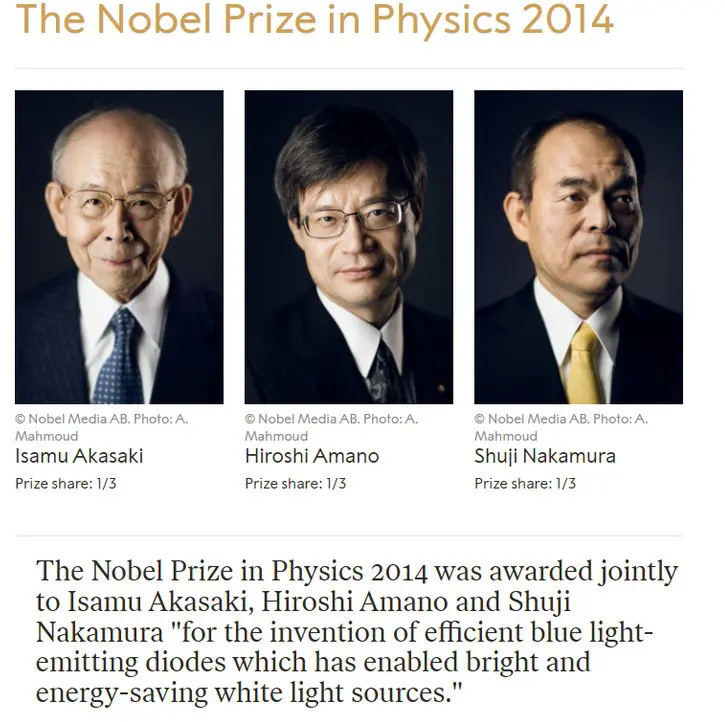
Despite the impressive breakthroughs in LED technology, red and yellow light are only beneficial in limited applications. The ultimate goal was to get white light that could be used for a greater variety of purposes. After decades of research, Japanese researchers Isamu Akasaki, Hiroshi Amano, and Shuji Nakamura developed the high-brightness blue LED in 1989. This opened the door to the production of white light LEDs and the three researchers shared the 2014 Nobel Prize in physics for this discovery.
LEDs are the preferred lighting technology for most modern applications because of their efficiency, versatility, and long operational life. They’re used in a multitude of products that we use on a daily basis – indoor and outdoor lighting, cell phones, vehicles, billboards, roadway signage, TVs, and computers immediately come to mind. In fact, the LED retrofit business exists solely to replace older lighting technologies with LED because they are a much better option. Furthermore, with the use of lighting control technologies like daylight sensors, motion sensors, dimmers, and connected controls, LED lighting can be optimized to each application. This flexibility saves energy and reduces maintenance needs over time, which is good for both your wallet and the environment.
The Future of Lighting
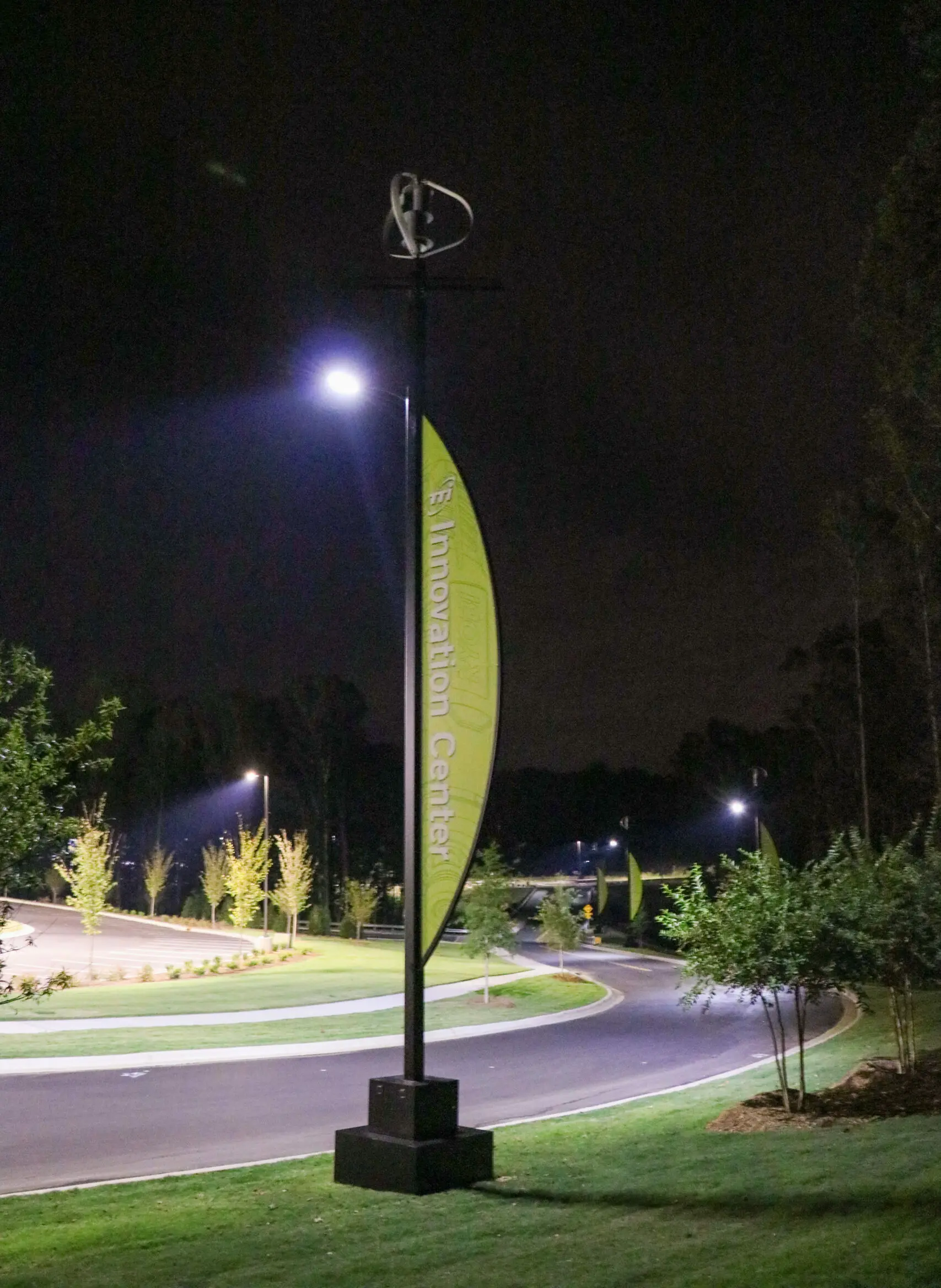
Innovations in technology are also leading the lighting industry into a more sustainable direction. LEDs’ incredible efficiency opens up greater possibility in functionality while using less power overall. Colite Technologies has capitalized on this benefit and designed customizable off-grid Renewable Lighting Systems.
These unique lighting systems pair solar and wind energy with battery energy storage to create a self-reliant light pole perfect for roadways, business parks, and parking lots. The Renewable Lighting Systems offer a sustainable alternative to traditional utility-provided street light poles and can be customized to fit your application. They are equipped with the following features:
- daylight and motion sensors that automatically control light output depending on the need
- battery energy storage for reliable operation
- optional custom branded banner signage, video camera surveillance, recreational bench seating, USB charging ports for small devices
Every advancement in electric lighting since the 18th century has helped build the technology that supports our sustainable, renewable energy-powered future. There is a bright path forward at the intersection of electric lighting and renewable energy — let Colite Technologies help you determine what is right for your business.