
Discover the Long-Term Benefits of Solar
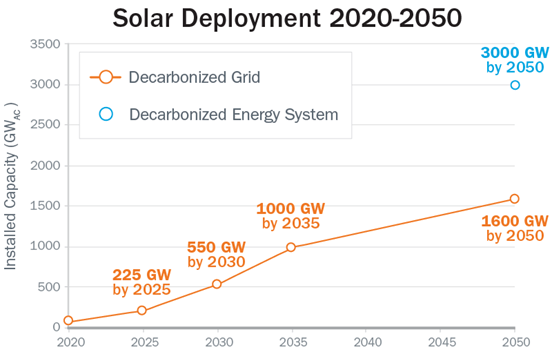
Renewable energy systems offer numerous benefits for customers, some of which are realized within the first year of installation while others grow over time. Increasing understanding of the long-term advantages of renewable energy is driving rapid expansion in the sustainable energy market, particularly solar PV. It is projected long-term benefits of solar energy, aggressive cost reductions, supportive policies, and large-scale electrification, could potentially contribute up to 40% of the nation’s electricity supply by 2035, and 45% by 2050.
Solar is already the fastest growing energy resource in the United States as a result of larger capacity additions and favorable tax credit policies. The tax credits and other funding help solar projects achieve an incredible return on investment, but many businesses are also incentivized by more long term, nonfinancial benefits as well.
Lower Energy Costs
The immediate benefit of a solar PV system is the direct energy offset from producing your own power. Energy generated through a rooftop array, parking canopy, or ground-mounted solar system goes straight into a business’s operations, reducing the amount of electricity purchased from the utility company. Colite Technologies’ customers have achieved energy offsets ranging from 20% to over 100%, resulting in average savings of nearly $15,000 per year on energy expenses.
Beyond the short-term savings, the long-term benefits of solar are even more significant. The industry standard for a solar PV system’s performance life is approximately 25 to 30 years, meaning an installation today will continue generating clean energy for decades with routine maintenance. Over a 25-year lifespan, these savings can exceed $370,000 per customer, making solar not just a sustainable choice, but a smart financial investment as well.
In addition, many utilities offer programs that ensure no excess energy is wasted. Through net metering, customers can receive credits or payments for any electricity their system sends back to the grid. Using a bi-directional meter, the utility tracks both consumption and contribution, billing only for the net usage. This means that during periods of high solar production, building owners can actually earn money for the surplus power their systems generate.
Don’t forget about tax credits!
Other long-term benefits of commercial solar are tax credits and rebates that can be leveraged in your business’s finances. There are numerous tax credits from federal and state governments for renewable energy investments, the most popular one being the business Investment Tax Credit (ITC).
The Inflation Reduction Act significantly expands and builds upon the ITC with extended eligibility and bonus credits for meeting additional criteria. Taking advantage of multiple tax credits helps decrease the initial costs of installing a solar system and spreads the remaining costs over time.
Risk Mitigation
Investing in solar power offers the reassurance that a portion of energy expenses is shielded from rising energy prices. From 2021 to 2022, commercial electricity rates increased 6.2% and industrial electricity rates jumped 8.7%. Utility companies will continue to increase rates in the future as they upgrade equipment, infrastructure, or build entirely new generation units to meet higher demand. However, since a solar PV system is owned by the property owner in most cases, any electricity produced from solar is not subject to utility rate increases. This eliminates uncertainty in fluctuating energy costs and provides a reliable source of power that is controlled by the owner.
Beyond resilience, the long-term benefits of solar make it a strong investment for any organization. Over time, solar systems reduce electricity costs and hedge against rising energy prices, providing predictable energy expenses. Systems are designed to last 25 years or more, with minimal maintenance, creating sustained savings. Additionally, solar adoption can increase property value, improve sustainability credentials, and contribute to a reduced carbon footprint—benefits that grow and compound over the years. With supportive policies and incentives, the economic and environmental advantages of solar continue to expand, making it a forward-looking choice for businesses and homeowners alike.
Long-Term Sustainability
Environmental sustainability is another key driver for businesses investing in solar energy. Many companies have robust sustainability goals that include reducing greenhouse gas emissions and using less resources to help lessen their impact on the natural environment. There is a growing urgency to address climate change and the pressure from consumers, particularly younger generations, is reaching the top levels of organizations. Further, an increasing number of businesses are subject to climate reporting and must measure, track, and report on their carbon footprint.
A solar installation, whether rooftop, canopy, or ground mount, provides multiple benefits to the environment by reducing the amount of energy procured from the utility. A majority of utility power plants burn natural gas to generate electricity – contributing to about 34% of total energy-related carbon dioxide emissions in the US in 2021. Therefore, by avoiding utility electricity, you reduce the amount of greenhouse gases put into the atmosphere and shrink your environmental impact.
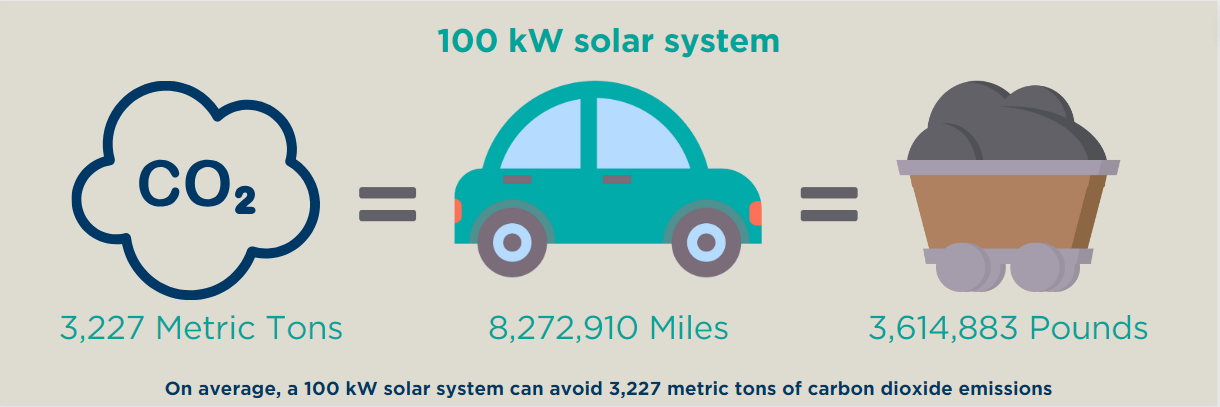
For example, a 100kW solar PV system avoids 3,227 metric tons of CO2 emissions over 25 years. To put this into perspective, this amount is equivalent to the emissions resulting from driving 8,272,910 miles in a standard gasoline-powered vehicle or burning 3,614,883 pounds of coal. Over time, these reductions lead to improvements in air quality, wildlife habitats, and critical ecosystems. As a bonus, if the solar panels are on the rooftop of an existing building, there is no physical impact on the surrounding land and preserves local greenery.
Still Worried About the Long-term?
When you partner with Colite Technologies, our team will design a customized commercial solar PV system tailored to your building’s specific energy needs. Each proposal includes an economic model outlining the system’s expected 25-year performance, helping you visualize projected energy production, long-term savings, and available financial incentives such as tax credits or grant funding. Long-Term Benefits of Solar are clearly demonstrated through this model.
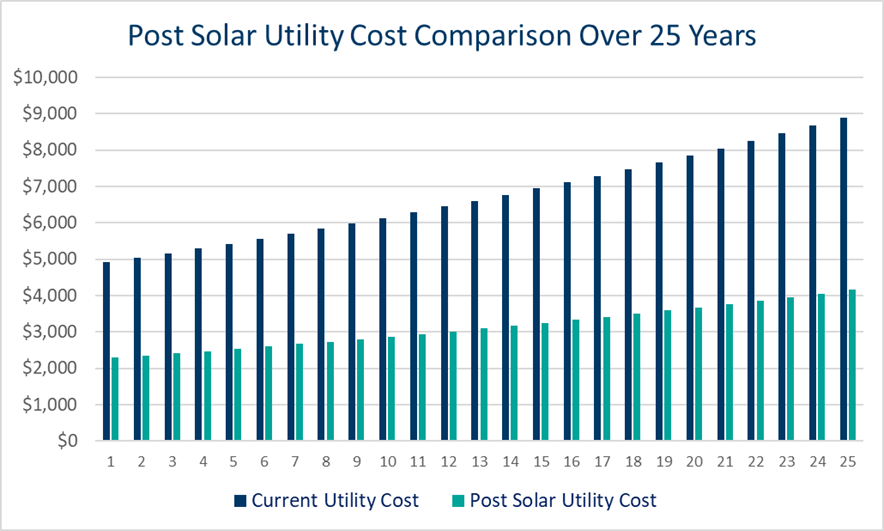
The example graph below compares annual utility costs before and after solar installation over a 25-year period, assuming a 2.5% annual electricity rate increase. This side-by-side view highlights the substantial financial savings solar provides in the long run. As long as the sun shines, you’ll have a reliable, renewable source of onsite power generation that reduces your dependence on the grid and delivers lasting economic value.
If you are looking for long-term benefits of solar savings, risk management strategies, smaller environmental footprint, or all of the above, solar could be a great solution for your facility. Here at Colite Technologies, we make sure that your solar system is designed to maximize your benefits and performs for years to come. You can be confident that your investment in a commercial or industrial solar project is fully evaluated for the long-term and supports you, your business, and the environment.