
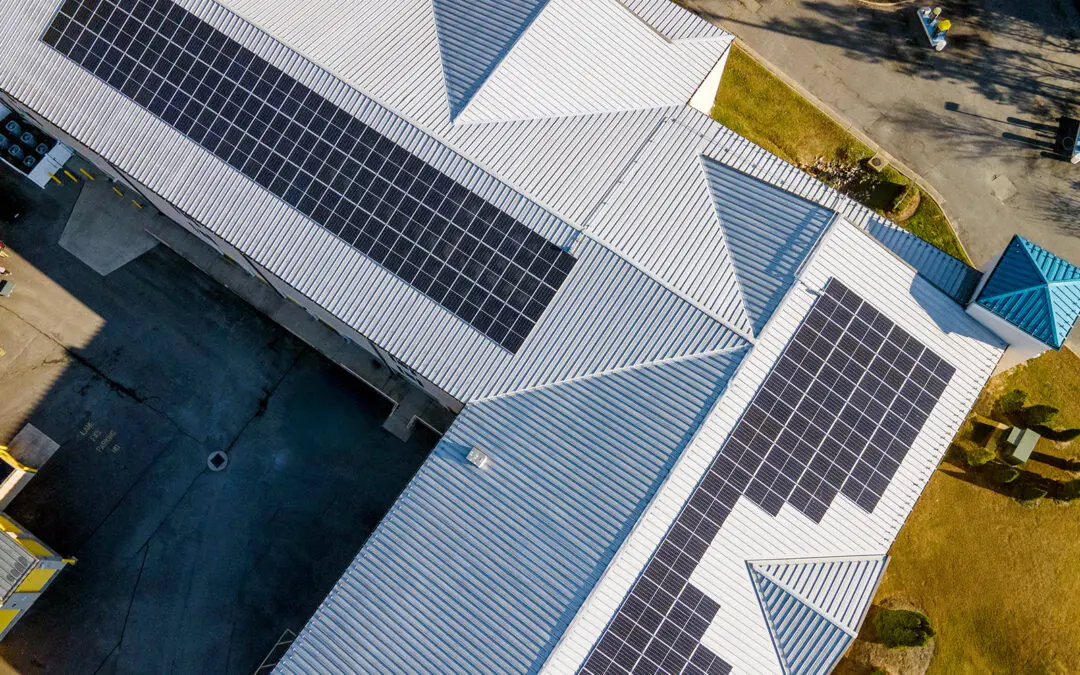
Investing in commercial solar for your business marks a significant step towards sustainability, efficiency, and long-term cost savings. However, it’s natural to have questions and concerns about what to expect throughout the process. Whether you’re considering harnessing solar energy to reduce your carbon footprint or looking to boost your business’s bottom line, we are here to help you navigate the transition to solar power and renewable energy.
Equipment
Each component of a commercial solar & industrial solar system plays a crucial role in the performance and integrity of the project. Here is an overview of the key pieces of equipment typically used in a system:
- Solar Panels: Solar panels, also known as photovoltaic (PV) modules, are the most visible component of a solar installation. These panels are made up of solar cells that convert sunlight into electricity through the photovoltaic effect.
- Inverters: Inverters are essential components of a commercial solar system that allow you to use the electricity produced from solar. Inverters convert the direct current (DC) electricity generated by solar panels into alternating current (AC) electricity suitable for use in buildings and appliances. There are different types of inverters available, including string inverters, microinverters, and power optimizers, each offering specific benefits in terms of efficiency, scalability, and monitoring capabilities.
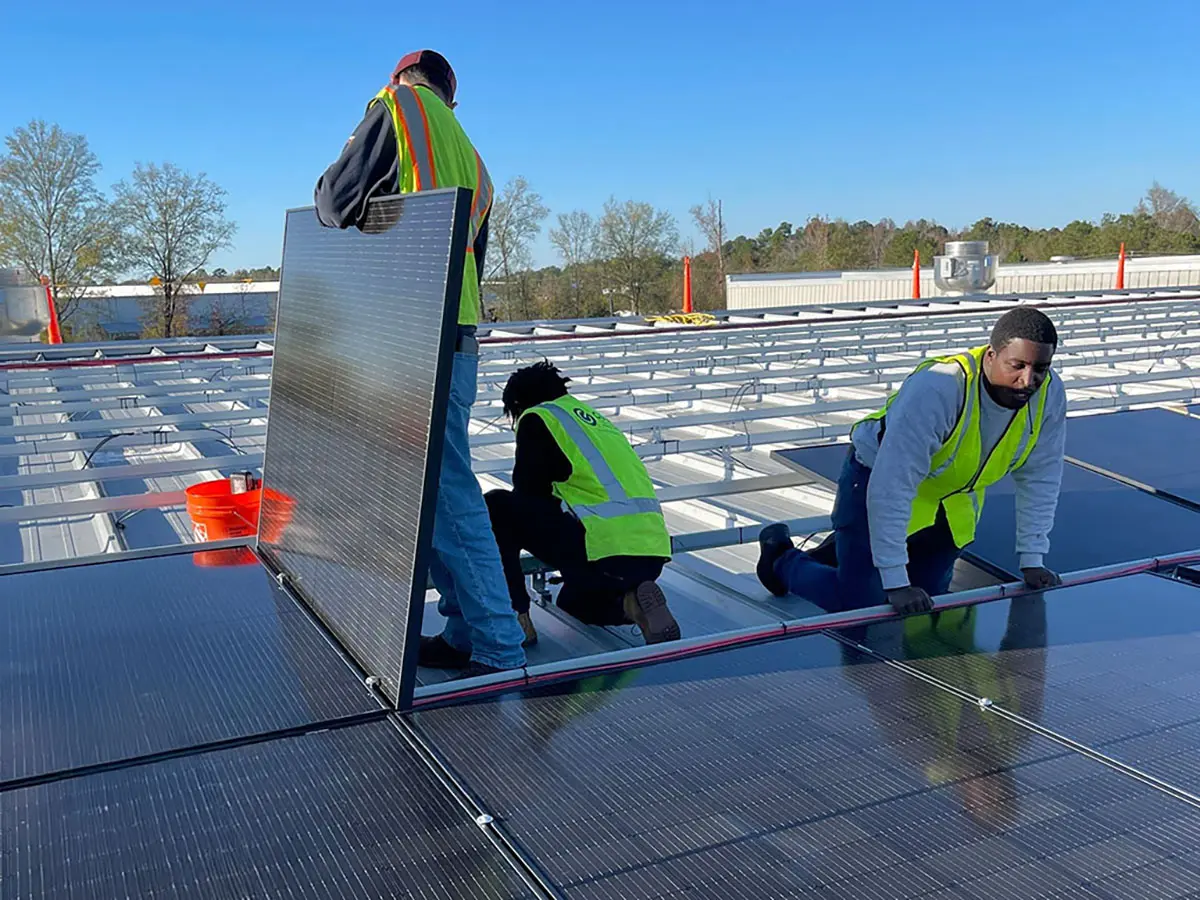
- Mounting Structures: Mounting structures provide support and stability for solar panels, making sure they are securely installed on rooftops, parking canopies, or ground-mounted systems. Commercial solar mounting systems are designed to withstand various weather conditions and are often adjustable to optimize the angle and orientation of solar panels for maximum sunlight exposure.
- Racking Hardware: Racking hardware secures solar panels to the mounting structure and provides the necessary electrical grounding for the system. The type of hardware used is determined by the mounting structure of the project. Colite Technologies prioritizes hardware that does not penetrate the roof to maintain existing warranties and eliminate the risk of roof leaks.
- Remote Monitoring Kit: The majority of solar inverter brands offer remote monitoring capabilities that can be activated via a wireless internet connection or cellular data network. They are paired with an online portal that shows real-time solar performance data and allows business owners to identify potential problems before they escalate.
At Colite Technologies, we leverage our extensive experience to select high-quality solar equipment that lasts for the entire 25 year system life. We ensure every customer maximizes their investment in sustainable energy and each project supports their long-term goals.
Commercial Solar Performance
Commercial solar energy systems are robust, dependable, and offer businesses consistent and efficient electricity generation. Our team conducts several in-depth analyses to maximize overall performance. We start with a virtual examination of the property via Google Earth images to get an initial estimate of the solar potential. Then, we move forward with a complete on-site survey conducted by one of Colite Technologies’ experts.
In these analyses, we determine key elements such as:
- Solar Panel Efficiency: When sunlight reaches a solar panel, not all of the energy gets converted into electricity. How much sunlight becomes usable electricity is known as the solar panel efficiency. The average efficiency of a commercial sized, Tier-1 solar PV panel is between 18% to 22%. Advances in solar technology have led to increased efficiencies up to 25% for some panels. It is also important to note that advertised equipment efficiencies are measured under ideal testing conditions, so the solar panel will perform differently in the field.
- Orientation: In the northern hemisphere, solar arrays should always face south for the best performance. As the sun moves across the sky from east to west, a southern-facing system will receive the maximum amount of sunlight throughout the day and thus produce the most energy. In some cases, an east-west facing solar system can still offer good energy savings if facing south is not feasible. North facing arrays are very rare and usually do not offer a good return on investment.
- Shading: A critical consideration in solar performance is the amount of shade that falls onto the panels. If there is shade, there is no sunlight, and therefore no electricity production. Commercial and industrial buildings often have large air conditioning units on their roof, parapets along the outside edge, or tall trees or buildings nearby, that can create substantial shadows across the solar system. Our team accounts for shading impacts like these in two steps: first by a visual inspection of the site, then by modeling the 12-month solar potential to get a realistic expectation of energy production. Sometimes, the shading is too significant on a roof and a solar investment may not be a good fit. In these cases, Colite Technologies recommends evaluating a parking lot canopy or ground mount option.
- Maintenance: Commercial solar installations are low-maintenance systems. However, there is still some regular maintenance that is necessary for ensuring the continued performance of the system. Routine inspections of electrical connections and the surrounding area help prevent issues such as dirt buildup, shading, or equipment malfunctions that can affect energy production. In most cases, you do not need to clean your solar panels – a simple rain or snow will wash the dirt off. If you live in an area that is dusty or sandy, you may need to wash the solar panels when you notice dirt buildup.
With the right equipment selection, engineering design, and site evaluation, solar PV systems offer businesses a cost-effective sustainable energy alternative. Colite Technologies carefully designs the system to achieve high performance; as a result, it helps lower operating costs and reduces a company’s carbon footprint year after year.
Reliability
Commercial solar energy is also highly reliable, with systems designed to provide consistent and dependable power generation over their 25 year lifespan. There are several attributes that contribute to the reliability of commercial solar:
- Minimal Moving Parts: Solar panels have few moving parts, reducing the risk of mechanical failure. This inherent simplicity means there are fewer components that could potentially malfunction, enhancing the overall stability of the system.
- Weather Resistance: Commercial solar panels are built to withstand various weather conditions, including rain, wind, and snow. They are made of durable materials such as tempered glass and corrosion-resistant aluminum frames, ensuring that they can resist the elements and continue to generate electricity efficiently.
- Long Lifespan: Solar panels come with production warranties ranging from 25 to 30 years, and many PV panels continue to produce electricity well beyond their warranty period. With proper maintenance, commercial solar systems can provide consistent power generation for decades.
- Backup Solutions: In instances where grid power is unavailable, businesses can install backup solutions such as battery storage to support the reliability of their solar system. Battery storage allows businesses to store excess solar energy generated during the day and use it during periods of high demand or when sunlight is unavailable, protecting you from outages or grid disruptions.
With minimal maintenance requirements, long lifespans, ability to withstand weather conditions, and availability of backup options, commercial solar offers a dependable source of clean and sustainable power for businesses.
Colite Technologies combines our industry experience with high-quality equipment to design and install high-performing solar PV systems. No matter if the system is on the roof, a parking lot canopy, or a ground mount, every detail is accounted for and carefully balanced into an optimized project. Our commitment to quality and innovation guarantees that your commercial solar journey is not just efficient, but also enduring.