
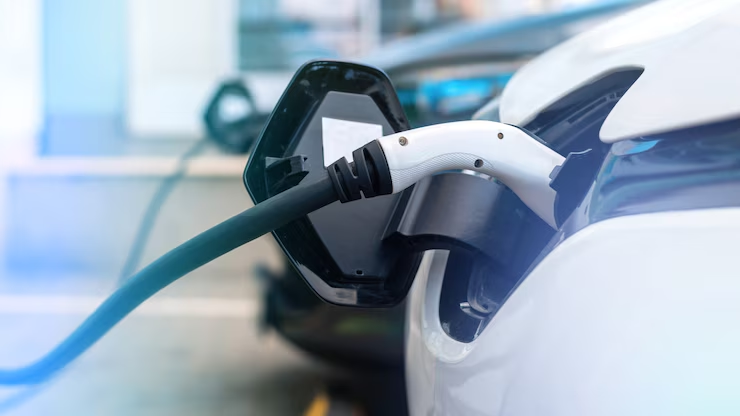
The electric vehicle (EV) wave isn’t coming—it’s already here. If your business hasn’t jumped on board yet, you’re probably wondering: is workplace EV charging really worth it? Spoiler alert: in 2025, it’s not just worth it—it’s one of the smartest moves you can make. Let’s break down why.
The Rise of EVs: A Quick Look
In 2025, EV sales are projected to hit record highs. With more affordable models, longer ranges, and robust charging infrastructure, electric is no longer just for early adopters. As employees and customers go electric, your business needs to keep up.
What Is Workplace EV Charging?
Workplace EV charging means installing charging stations at your office, warehouse, or commercial site so employees, clients, and even fleet vehicles can plug in during the workday. Think of it as adding fuel pumps to your parking lot—but smarter, cleaner, and future-proof.
Why Now? Why 2025 Is a Tipping Point
- Government Incentives: Generous tax credits and state-level programs make EV charger installation more affordable than ever.
- Corporate ESG Goals: Sustainability targets aren’t optional anymore. EV charging helps check that box.
- Talent Attraction & Retention: Younger employees (and many others) expect green benefits like EV charging.
- Energy Strategy: Pair EV chargers with solar and energy storage for a complete clean energy ecosystem.
Top Business Benefits of Offering EV Charging
1. Enhance Employee Satisfaction
Employees love convenience. Offering EV charging at work makes their lives easier—no more range anxiety, no more charging station hunts before or after work.
2. Support Sustainability Goals
If your company has a carbon reduction plan or a sustainability pledge, EV charging is a visible and meaningful step forward.
3. Attract Eco-Conscious Customers and Tenants
For retail spaces, multi-use developments, and landlords, EV charging is a powerful draw. Shoppers are more likely to linger if they can charge while they browse.
4. Boost Property Value
Installing charging stations adds modern infrastructure to your property. It’s an upgrade that can justify higher rents or resale value.
5. Future-Proof Your Business
Regulations are shifting fast. Installing EV infrastructure now prepares you for zoning, fleet mandates, and sustainability reporting requirements that are coming.

Types of EV Charging for Workplaces
Level 1: The Basics
These plug into a regular 120V outlet. Great for emergencies, but far too slow for daily workplace needs.
Level 2: The Workplace Standard
These offer 240V charging, adding about 20-25 miles per hour. Ideal for employee cars and most fleets.
DC Fast Charging: Power When You Need It
Perfect for fleets or client vehicles that need quick top-ups. Higher cost, but also higher ROI in the right setup.
Cost of EV Charging Installation (And Why It’s Less Than You Think)
You might be thinking: “All this sounds great, but how much is it going to cost me?” The good news is, thanks to tax credits, rebates, and utility incentives, upfront costs are much lower than you’d expect.
- Federal tax credits (like the ITC) can cover up to 30% of project costs.
- State-level programs vary, but many offer rebates up to $4,000 per charger.
- Utility incentives often cover installation and upgrades.
How Colite Technologies Makes It Easy
Colite Technologies isn’t just a solar company—we offer turnkey EV charging solutions designed for commercial clients. From design and permitting to installation and maintenance, we handle everything.
- Site evaluations to determine the best location
- Charger selection based on your fleet or employee needs
- Integration with solar + battery systems
- Ongoing monitoring and support
Smart Charging = Smart Business
Modern EV chargers are more than just plug-in boxes. With smart features, you can:
- Track usage by employee or fleet
- Set charging schedules to optimize electricity rates
- Enable guest charging or restrict access
- Integrate billing or offer charging as a perk

Common Myths About Workplace EV Charging
“EVs Aren’t Popular Enough Yet”
Not true. By 2025, EVs will represent over 20% of all new vehicle sales in the U.S.
“Only Big Companies Can Afford It”
Also, false. With incentives and falling equipment costs, businesses of all sizes can install chargers.
“It’s Too Complicated”
Not with the right partner. Colite Technologies takes the complexity out of the process.
Real-World Use Cases
Fleet Electrification
Logistics, delivery, and utility companies are moving to EV fleets. Charging at the depot is crucial for smooth operations.
Mixed-Use Developments
Retail centers and office parks can attract tenants and shoppers with convenient EV charging access.
Corporate Campuses
Large employers can use EV charging as part of their green HR and facilities strategy.
What to Consider Before Installing
- Power availability: Does your building have enough capacity?
- User type: Are you supporting employees, customers, or a fleet?
- Number of chargers: Start small or future-proof with conduit for more.
- Software needs: Will you track usage, bill users, or offer free access?

Don’t Forget Maintenance
Like any equipment, EV chargers need upkeep. Colite offers ongoing service and monitoring to keep things running smoothly.
Integrating EV Charging with Solar
One of the smartest strategies is to pair EV charging with solar panels and energy storage. This lets you:
- Charge vehicles with clean, renewable power
- Cut grid dependency
- Store excess solar to use during high-demand periods
Take Advantage of 2025 Incentives
With government and utility incentives at record highs, 2025 is the year to act. Waiting may cost more later—in dollars and lost opportunity.
Conclusion: The Future is Plugged In
Offering EV charging at your workplace isn’t just about staying current—it’s about being ahead. It shows you care about your employees, the environment, and the future of your business. In 2025, plugging in is no longer optional. It’s the next step in smart, sustainable growth.
Ready to bring EV charging to your business? Let Colite Technologies design the right solution for your space, goals, and budget. The future is electric—and it starts in your parking lot.