

If you’re a business owner considering commercial solar in South Carolina, the cost of installation is only part of the equation. State and federal incentives can significantly affect the overall economics of a solar investment, helping businesses reduce their tax liability, improve project returns, and accelerate the path toward long-term energy savings.
South Carolina has established incentives that can make commercial solar more attractive for businesses across the state. However, understanding how these programs work, and which ones may apply to your facility, is essential before moving forward.
In this guide, we’ll break down the key South Carolina commercial solar incentives business owners should know about and explain how Colite Technologies helps businesses evaluate available opportunities.
Why South Carolina Businesses Are Considering Commercial Solar
South Carolina is home to a wide range of energy-intensive businesses, including manufacturing facilities, distribution centers, agricultural operations, hotels, financial institutions, and other commercial properties.
For many of these facilities, electricity represents a significant recurring expense.
A properly designed solar system can help businesses:
- Reduce long-term electricity costs
- Offset electricity purchased from the utility
- Improve energy cost predictability
- Support sustainability initiatives
- Increase energy independence
- Improve resilience when paired with battery storage
- Take advantage of available incentives and tax benefits
At Colite Technologies, we approach commercial solar in South Carolina as a long-term energy strategy, not simply a solar panel installation.
Our team evaluates the facility, energy usage, electrical infrastructure, and project goals to develop a system designed around the business.
South Carolina’s Solar Energy Tax Credit
One of the key incentives’ businesses should understand when considering commercial solar in South Carolina is South Carolina’s Solar Energy Credit.
The South Carolina Department of Revenue allows qualifying taxpayers to claim a credit equal to 25% of eligible costs associated with purchasing and installing a qualifying solar energy system. The credit can apply to systems used to generate electricity and other qualifying solar applications.
However, businesses should understand that the credit is subject to annual limitations.
The amount that can be claimed in a tax year is limited to the lesser of:
- $3,500 per facility, or
- 50% of the taxpayer’s South Carolina income tax liability
Unused portions of the credit may generally be carried forward for up to 10 years, subject to the applicable limitations.
Because larger commercial solar projects can involve substantial upfront investment, understanding how the state credit fits into the overall financial structure of a project are important.

Southeastern Freight Lines
What Does the 25% Credit Mean for Your Business?
The 25% state credit does not necessarily mean a business receives 25% of the project’s cost back immediately. The amount and timing of the benefit depend on factors such as the project’s eligible costs, the facility, and the business’s tax liability.
That’s why incentive planning should happen during the early stages of a solar project, not after the system has already been designed.
At Colite Technologies, our team helps businesses evaluate available incentive opportunities as part of the larger project-planning process.
Federal Incentives Can Increase the Value of Commercial Solar
South Carolina’s state tax credit is only one piece of the financial picture.
Depending on project timing and eligibility, federal incentives may also provide significant value for businesses investing in solar and energy storage.
The federal Clean Electricity Investment Credit under Section 48E can provide a base credit and may reach 30% when applicable prevailing wage and apprenticeship requirements are satisfied. Additional bonus opportunities may also be available for qualifying projects.
However, federal clean energy incentives have changed significantly in recent years, making project timing and eligibility especially important.
For businesses evaluating commercial solar in South Carolina today, incentive planning should account for the current federal requirements rather than relying on older assumptions about solar tax credits.
Every South Carolina Business Has Different Energy Needs
There is no single solar system that works for every business.
A manufacturing plant may have large daytime electrical loads. A distribution center may have significant warehouse and refrigeration demands. An agricultural operation may have specific seasonal energy requirements.
The right solution depends on the facility.
Before designing a commercial solar in South Carolina project, businesses should consider:
Facility Conditions
Roof condition, available space, structural considerations, shading, and site layout can all affect the design of a solar system.
Energy Consumption
Understanding when and how a facility uses electricity helps determine the appropriate system size and potential energy savings.
Electrical Infrastructure
The existing electrical infrastructure needs to be evaluated to determine how the solar system will integrate with the facility.
Future Energy Needs
Businesses should also consider future expansion, increased electrical loads, EV charging, battery storage, and other technologies that may affect their energy strategy.
Financial Goals
Every business has different priorities. Some may focus primarily on reducing operating costs, while others may prioritize sustainability, energy independence, or long-term asset value.
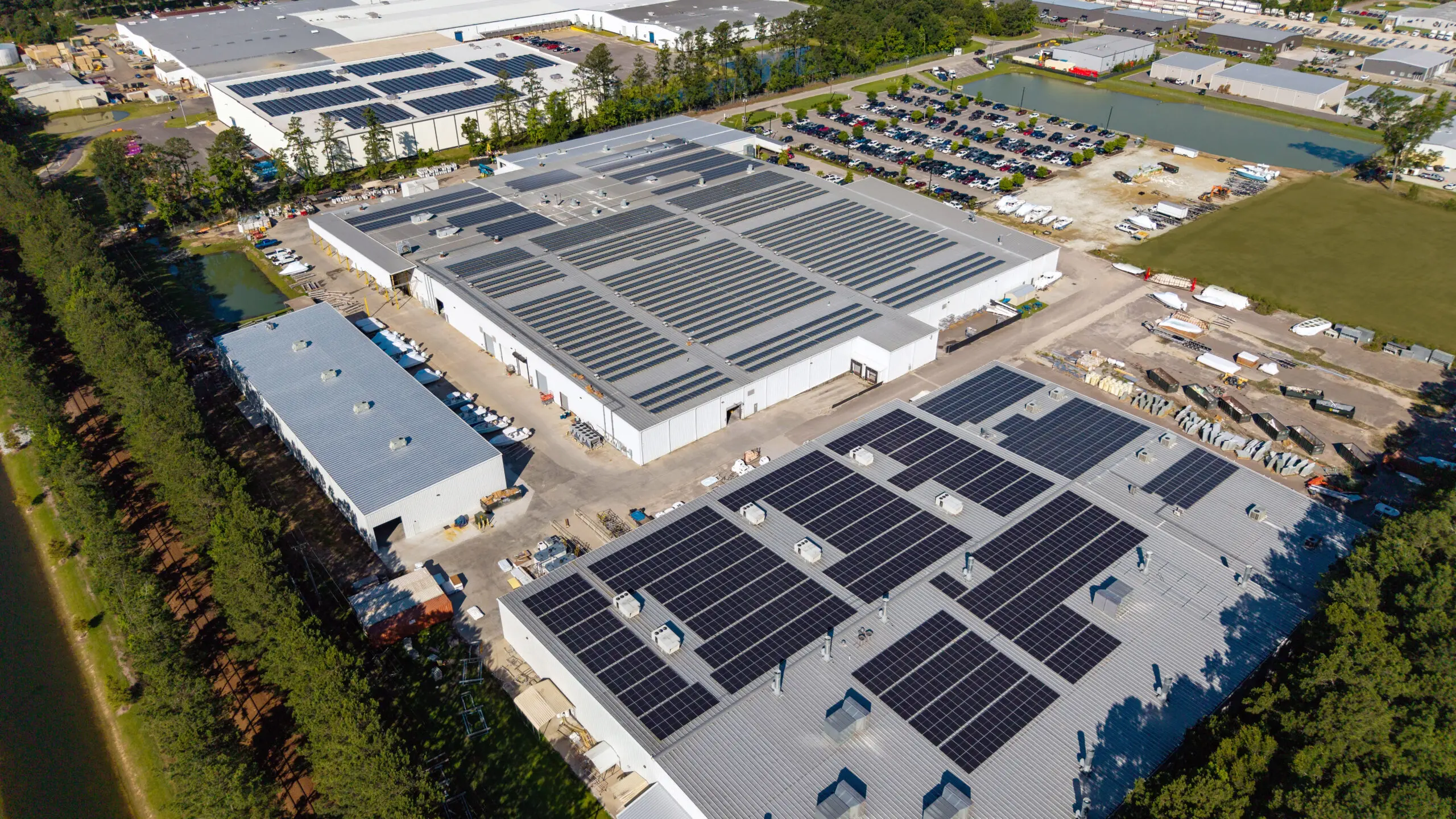
Sportsman Boats
How Colite Technologies Supports South Carolina Businesses
For businesses considering commercial solar in South Carolina, choosing the right partner is just as important as understanding the incentives.
Colite Technologies is headquartered in Columbia, South Carolina, giving our team firsthand knowledge of the state’s commercial energy landscape.
We provide turnkey solar solutions that bring engineering, procurement, construction, and ongoing support together under one coordinated team. Our in-house team includes a Professional Engineer and Master Electricians, allowing us to manage critical aspects of the project from design through installation.
Our approach includes:
- Engineering: Designing systems around your facility, electrical infrastructure, energy use, and project goals
- Procurement: Coordinating equipment and materials around the engineered system
- Construction: Managing professional installation, testing, and commissioning
- Energy Storage: Integrating battery systems when they provide additional value
- Monitoring & Maintenance: Supporting system performance after installation
- Incentive Planning: Helping identify available state and federal opportunities
With one team managing the project, businesses don’t have to coordinate multiple vendors for engineering, equipment procurement, construction, and other critical project components.